

AHBIC Biosecurity Update – Varroa Synthetic Chemical Resistance Management
29 April 202629th April 2026 What We Know Varroa synthetic chemical resistance detections have been laboratory confirmed and considered established broadly across NSW and southern QLD. It is no longer considered geographically […]
29th April 2026
What We Know
Varroa synthetic chemical resistance detections have been laboratory confirmed and considered established broadly across NSW and southern QLD. It is no longer considered geographically confined with reports of treatment issues being confirmed across large areas.
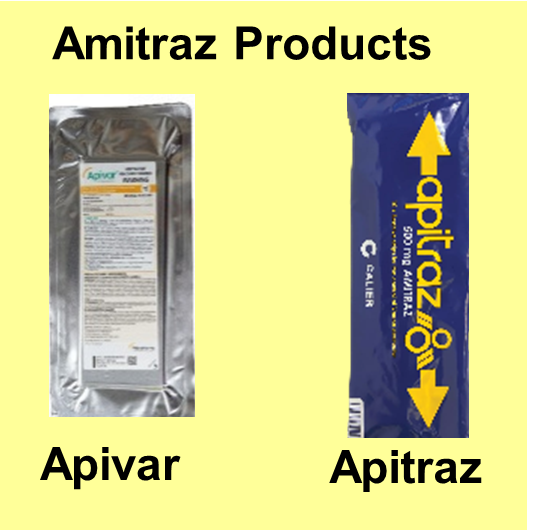
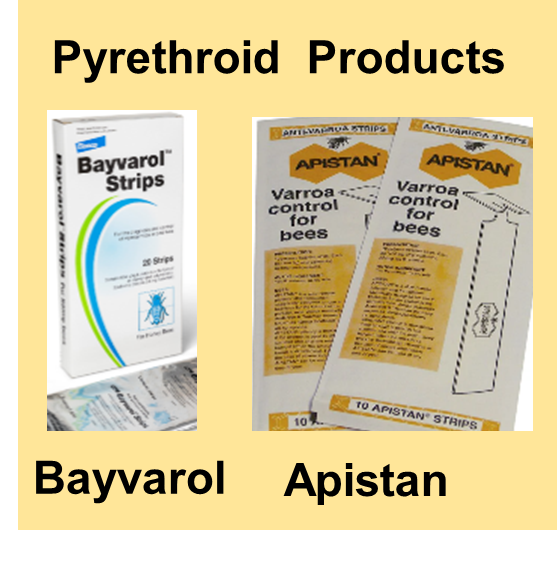
Beekeepers are experiencing reduced or even complete failure of treatments due to populations of Varroa destructor having resistance to synthetic pyrethroids and amitraz products this affects Bayvarol, Apistan, Apivar and Apitraz branded products, pictured.
Important: If you suspect you might have resistance or are in an area that has known resistant populations you should not use synthetic miticides until your resistance status is formally identified.
Key Priorities for Beekeepers
To minimise the risk of treatment failure and colony death, beekeepers must:
- ROTATE between modes of action.
- MONITOR treatment performance.
- Implement Integrated Pest Management (IPM) strategies utilising all treatment options both chemical, mechanical and cultural in every management strategy.

Economic Thresholds – Can be Adapted
The current thresholds are a good guide for beekeepers to adopt. However, they are not fixed or legislated nor stipulated on product labels. It’s up to individual beekeepers and their risk appetite and situation to determine mite thresholds.
Where there is resistance, beekeepers are reporting they are struggling to reduce high mite numbers with acids alone, so re-evaluating thresholds can help in ensuring you maintain low mite counts in the short term.
If you know or suspect you might have resistance, it’s important to consider lowering your mite threshold to ensure low mite counts can be maintained. Beekeepers need to plan for emergency situations when treatment failure is detected to prevent mite run away in hives.
Monitor Chemical Treatment Performance
By knowing your mite levels, you can determine not only when to treat but also whether your treatment is working.
Pre-treatment
- Alcohol wash hives immediately prior to treatment to establish a baseline.
- The more hives you wash the better but at least 10% per apiary.
- Record individual hive mite counts (i.e. note wash result on lids) averaging is also ok but not as accurate.
Mid-treatment
- Alcohol wash hives mid-treatment time, i.e. at weeks 3-4 (Pyrethroid) and 5-6(Amitraz), to establish early confirmation of efficacy or potential failure.
- Keep the method consistent.
- You MUST monitor the same hives in the apiary each time. This will allow a clear comparison to assess treatment efficacy.
- If mite counts are the same or slightly lower than baseline there is no cause for immediate concern, but it is important to follow up with post treatment monitoring.
- If mite counts are significantly more than the pre-treatment/baseline in any hive, this is cause for concern and we recommend:
- Immediately remove the synthetic treatment, use an organic acid treatment to knock down phoretic mite numbers, immediately continue with next treatment in IPM strategy.
- Contact your state department apiary team.
- Collect mite samples arrange further testing immediately.
Post-treatment
- Alcohol wash hives at treatment removal, not a week after treatment removal, again following the same procedure as pre and mid treatment.
- If mite counts are the same or more than the baseline mite numbers you need to take action
- Consider following up with an urgent organic acid treatment to knock down phoretic mite numbers as quickly as possible.
- Immediately continue with next treatment in IPM strategy to ensure colony survival.
- Contact your state department apiary team.
- Collect mite samples and arrange further testing immediately.
Further Information
- QLD department page, QLD DPI Resistance Video
- NSW department page
- AHBIC Chemical Treatments Table
- AHBIC Varroa Mite Resistance article
- SCU Varroa Resistance In-field Test
It is never too early to test for resistance, be proactive to ensure colony survival.
AHBIC has been advocating for alternative testing options for determining resistance status in your hives that offers both economical and rapid commercial testing for resistance.
If you suspect resistance and are interested in testing, keep the contents of your mite wash. Notify the supplier of your treatment about suspected resistance. Testing will soon be available through “D-central” contact them via their website D-central or email: info@d-central.au
CLICK HERE TO OPEN This Update IN PDF
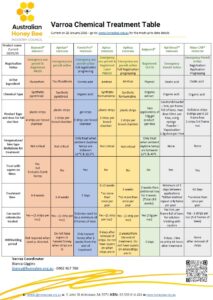
Refer to the AHBIC Varroa Chemical Treatment Table for a quick guide to modes of action and better treatment understanding.
Bianca Giggins
Industry Development Manager
0402 467 780
AHBIC, its employees, executive and consultants expressly disclaim all and any liability to any person in respect of anything, and the consequences of anything, done or omitted to be done in reliance, whether wholly, partly, upon the whole or any part of the contents of this industry update document.
