
New Research, Development and Extension Plan for the Honeybee Industry
24 August 20262026 – 2031 The AgriFutures Honey Bee & Pollination Program invests in research, development and extension (RD&E) that improves the productivity, sustainability and profitability of the Australian beekeeping industry and […]
2026 – 2031
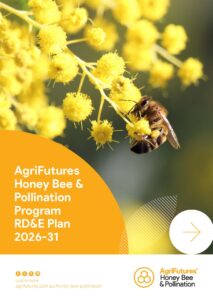
The AgriFutures Honey Bee & Pollination Program invests in research, development and extension (RD&E) that improves the productivity, sustainability and profitability of the Australian beekeeping industry and secures the pollination of Australia’s horticultural and agricultural crops.
The R, D & E Plan 2026-31 has been developed in consultation with industry to guide strategic investment over the next five years. It provides a clear framework for RD&E that is focused on practical outcomes for beekeepers. The Plan balances immediate industry needs with longer-term opportunities and will guide investment decisions that maximise value for levy payers, leverages co-investment where appropriate and maintains flexibility to respond to emerging threats.
Priorities & Impact statements
-
BEE HEALTH, RESILIENCE AND PRODUCTION
-
NEW AND EMERGING PESTS AND DISEASES
-
AGRICULTURAL INTEGRATION AND INCOME DIVERSIFICATION
-
FLORAL RESOURCES AND ENVIRONMENTAL CONDITIONS
-
PRODUCT DIFERENTIATION AND NEW PRODUCTS
Shaped with industry input
The RD&E Plan has been informed by a comprehensive consultation process, ensuring it reflects both current priorities and future opportunities for the sector.
More than 2,000 industry members were invited to contribute through a national survey, providing insights into key opportunities, challenges and emerging trends. This was complemented by targeted engagement with key stakeholders and the AgriFutures Honey Bee & Pollination Advisory Panel. Scenario planning workshops held in Queensland and South Australia brought industry representatives together to test potential directions and explore future scenarios. Ongoing engagement with the Australian Honey Bee Industry Council (AHBIC) further strengthened and refined the Plan as it evolved. A draft Plan was also shared more broadly, including through a webinar, allowing stakeholders across the industry to provide feedback prior to finalisation.
AHBIC Chair Jon Lockwood said RD&E remained critical to the long-term success of Australia’s honey bee and pollination industry.
On the new plan, AgriFutures spoke with AHBIC Chair person Jon Lockwood who has said:
“RD&E plays a vital role in helping Australian beekeepers respond to current challenges and remain competitive and resilient into the future. This Plan sets a clear direction for investment in the priorities that matter most to industry, ensuring levy funds are directed towards outcomes that strengthen productivity, resilience and long-term sustainability”
Take a deep dive here:
AgriFutures Honey & Pollination RD & E Plan
A current request for quote is also open until 22 September:
Deliver practical impacts for the honey bee and pollination industry
AgriFutures invites proposals that address one or more of the priorities and strategies outlined within the AgriFutures Honey Bee & Pollination Program RD&E Plan 2026-31, or within the Varroa destructor Research Strategy 2024-2027. Proposals should focus on delivering short-term research projects, extension or training (~18 months) with immediate practical implications for industry.
Request for quote further information
Where applicable, proposals should clearly indicate the following:
- The project benefits and impacts for the Australian honey bee and pollination industry.
- The objectives and outcomes of the proposed project and the link to the RD&E and/or Research Strategy objectives.
- Who will be undertaking all aspects of the work (it must be clear if new staff and/or students are to be employed to undertake the work).
- The plan for extension and adoption of research outcomes from the project activity work, i.e. beyond distribution of summaries, journal papers and conference presentations.
- Where relevant, any proposed collaboration with experts in the field.
- The researcher’s understanding of past research in this field.
The indicative budget for all projects included in this round of funding is up to $230,000. The expected timeframe for completion from commencement is up to approximately 18 months.
This Request for Quote closes on Tuesday, 22 September 2026 at 12 pm AEST.
