
Levies Proposal: Frequently Asked Questions
18 November 2026The Levy Proposal: Your Questions, Answered A quick, friendly guide to what’s proposed, what it means for you, and how to work out if the proposal will affect you. Change […]
The Levy Proposal: Your Questions, Answered
A quick, friendly guide to what’s proposed, what it means for you, and how to work out if the proposal will affect you.
Change can feel big, but the facts are simple. Here are the questions we hear most often about the proposed levy, answered in plain language.
Cost:
Is the levy just a new tax?
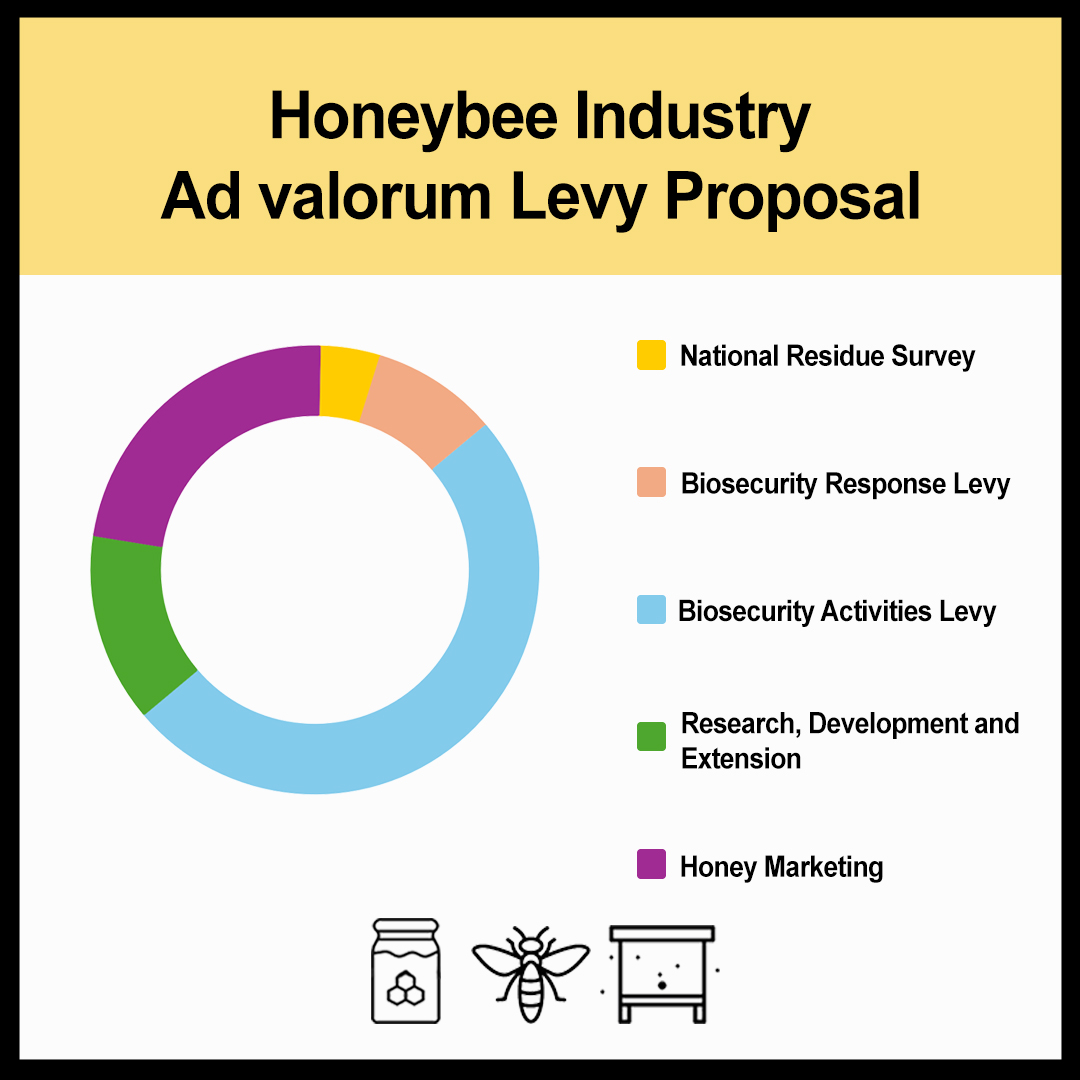
The honey levy is not new – a statutory honey levy has existed since 1962. It funds only the defined programs: national residue testing (DAFF), biosecurity (Plant Health Australia) and research and development (AgriFutures Australia), plus the proposed Australian honey marketing fund (also AgriFutures Australia). The levy does not fund AHBIC. Any change must meet the Australian Government’s 12 levy principles and goes through an independent industry ballot, Ministerial consideration and a minimum 30-day objection period.
Why is beekeeping singled out? Is paying the levy forced membership of AHBIC?
Levies like this are common in several other primary industries – the business case cites sheep (meat and wool), cattle, vegetables and even sweet potato (0.5% R&D, 1.0% marketing) as examples of levied industries in Australia. For clarification, the levy is a statutory charge on sales, not membership of an organisation. AHBIC is not funded by the levy and only oversees the programs on behalf of Australia’s honey bee industry, including participating in reviewing biosecurity plans. AHBIC is a federated model organisation, with members being associations only, not individuals. Our ten member bodies are listed on our website: Our Members – Australian Honey Bee Industry Council
Why add another cost to beekeepers? We are already doing it tough.
We understand the pressure beekeepers are under. The business case put forward by the AHBIC Levies Sub Committee sets out why doing nothing is not cost-free in the long term. If we don’t take action as an industry now, we will be facing serious risks to the activities we fund for ourselves.
For example, the current levy raises about $920,000 a year against program costs of about $1.2 million, and reserves we have now are expected to run out within two years. Without reform, port surveillance, Bee Biosecurity Officers, research and development and national residue testing would be required to be scaled back (residue testing supports export market access). The proposal also replaces 5.6c/kg with 1.25% of value, so payments move with honey, pollination and queen bee prices, and spreads the load across pollination and queen sales rather than honey alone.
Paying A Fair Share:
How will the levy apply to beekeepers who pack and sell their own honey?
We recognise that applying a value-based levy at the first point of sale raises questions for beekeepers who pack and sell their own honey, including those who sell directly to consumers.
The intent of the proposal is for the honey levy to be based on the farm-gate bulk honey value, not the retail price of a finished product. This would mean that the additional costs and value associated with packing, labelling and selling the honey are not the intended basis for calculating the levy.
AHBIC is working with the Department of Agriculture, Fisheries and Forestry (DAFF) to refine how this would work in practice, including how a suitable bulk honey value could be determined. The details are not yet finalised, and we will provide further information to industry as this work progresses.
Will hobbyists and small commercial producers who sell direct (not via a packer) pay their fair share?
The proposal impacts in two ways around this concept. The proposal lowers the honey threshold from 1,500 kg down to 1,000 kg a year (it was 600 kg before 2015) so more beekeepers who benefit from the programmes across Australia will be required to contribute. The proposal acknowledges that self-reporting can lead to under-reporting and that direct sales (roadside, farmers’ markets) rely on industry honesty, however DAFF do random compliance checks annually. Anyone selling over 1,000 kg of honey, including large hobbyists, are required to self report and pay levies. We note this proposal also applies to any pollination too, as pollination has no minimum threshold.
Today about 1,400 of the 46,000 registered beekeepers pay levies. So bringing in the reform will spread the collection of levies across industry more equitably than it does in it’s present format. Our calculation indicate levy collection costs are about $40 per payer, so it would cost more to collect from all 46,000 producers than these individuals would pay collectively, so the 1,000kg threshold needs to represent a fair collection volume. And 1,000kg of honey is more honey than just self-consumption.
Chase the non-payers and that will fix the looming shortfall?
Enforcement of the existing statutory levies is the responsibility of DAFF and annual audits do occur. The cost of DAFF chasing up levy payers is also a cost, which is paid for from the levy funds. Our industry is billed each time a levy payer is followed up through the DAFF compliance system outside of the random auditing process. Currently, we believe our industry collects around 65% of what is believed to be the leviable amount of honey produced for sale, anecdotal feedback from other industries is that 70-80% compliance rate is average. This is a significant leakage, however, fixing just the leakage would still not address the cost of activities shortfall we are facing across the levy system. If we elect to ‘do nothing’ or just focus on compliance it would mean, reserves are expected to run out within two years (by 2028), and port surveillance, Bee Biosecurity Officers, research and development and national residue testing would be scaled back significantly. More than just fixing leakage is required to address the looming deficit.
How to pay the levy?
Levy collection can be completed via two methods: the first is through the DAFF levy portal; where beekeepers self register and elect their preferred frequency of payment. The second method is via the packers of honey paying the levy amount required on behalf of the honey producer as their levy agent. The levy change proposal notes the ad valorem model is hardest to manage for integrated businesses and more information will be provided prior to the ballot being held. This way, beekeepers with integrated businesses can make a more informed decision.
Distribution of levies:
Where is levy money spent right now?
Levy funds go to DAFF, Plant Health Australia and AgriFutures (not AHBIC), proposed levy changes, as per the business case, commits to a performance check at year 2 and a full review at year 5. At present the levies we pay are distributed to and then managed by:
- DAFF – National residue survey,
- Plant Health Australia – Biosecurity (surveillance, bee biosecurity officers, emergency response) and,
- AgriFutures Australia – Research and development
Each of our levy’s distributions are held to account their spending through detailed legislation, reporting, strategic plans and audit processes.
Can levy funds be used for VSH breeder queens or a research station for Harbo assessments?
Queen bee breeding techniques and programs are all considered research and development (R&D) for our industry. R&D is funded through the levy R&D component (about $300,000/yr, matched by the Australian Government) and managed by AgriFutures Australia through the Honey Bee and Pollination Advisory Panel under their 5-year R&D Strategic Plan. The business case proposes no change to R&D funding.
What will the marketing levy look like and what will it do?
The proposed marketing levy would generate approximately $500,000/yr fund to be managed by an RDC (AgriFutures Australia or Hort Innovations). The activity of this funding will be determined through a 10 year deliver strategy consulted with and agreed to by industry. It is anticipated that the Marketing activities would focus on promoting Australian honey both domestically and internationally. These activities could have the goal of increasing domestic consumption, differentiating between Australian honey and imported honey, opening new export markets and driving export sales. The marketing levy would also enable leveraging through grants (export focus grants where matching funding is required) or enabling the honey bee industry to participate in broader trade delegations with other industries. The levy changes proposal does not propose import enforcement or labelling regulation; these are advocacy matters that AHBIC is actively working on outside the levy design.
Why is there no levy on imports?
AHBIC has and continues to lobby the Australian Government to impose a levy or tariff on imported honey. Import charges (imported honey levy) and tariffs are imposed under separate legislation and can not be considered in this process. However, AHBIC will continue to seek ways to reduce imported honey within the regulatory framework options available.
How much will I pay?
Facts are helpful, but having an estimate is better. Our levy calculator takes less than a minute: enter your figures and see a working estimate of what the proposal could mean for you.
TRY THE LEVY CALCULATOR: CURRENT Vs PROPOSED
