

AHBIC Industry Update 73 – Further SA Detection
21 November 2025Varroa Confirmed – Limestone Coast Varroa mite has been detected in beehives in the Limestone Coast region near Salt Creek, South Australia. A suspected detection of varroa mites in a hive was notified […]
Varroa Confirmed – Limestone Coast
Varroa mite has been detected in beehives in the Limestone Coast region near Salt Creek, South Australia.
A suspected detection of varroa mites in a hive was notified to PIRSA on Wednesday, 19 November, by a vigilant South Australian beekeeper undertaking routine surveillance. The sample was collected by PIRSA confirmed as varroa mite at the SARDI laboratory.
PIRSA and the beekeeper are working together to undertake surveillance and linked apiaries where additional surveillance will be undertaken.
To date there is no evidence that connects this detection to the previous Pooginook detection in the Riverland from September. A source for this incursion in the Salt Creek area is not known at this stage.
PIRSA Biosecurity Notice
A movement control has been applied to the affected apiary site to ensure bees, hives and associated equipment cannot be moved from the sites to allow a thorough traceback assessment, surveillance and treatment.
A Biosecurity Notice to beekeepers has been issued today, and a meeting of the South Australian Varroa Industry Advisory Committee (SAVIAC) has been held.
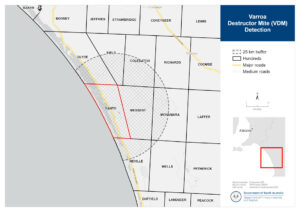
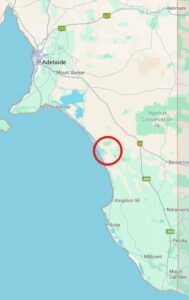
Planned PIRSA Surveillance
To allow for a thorough assessment of this latest detection, sticky mats and acaricides are being deployed across all potentially impacted hives. The enforced euthanasia of hives will not be undertaken by PIRSA. Support is being given to beekeepers to manage their hives impacted by varroa mite consistent with National and State transition to management plans.
South Australian Beekeepers
Any beekeepers who currently have, or since mid-October have had, hives within 25km of Salt Creek, or intend to keep hives in the area, are requested to contact the PIRSA Biosecurity Apiary Unit by emailing pirsa.beebiosecurity@sa.gov.au. All South Australian beekeepers are urged to:
- Inspect their hives regularly using alcohol wash, sugar shake, or sticky mat techniques.
- Report any suspected detections immediately to PIRSA via the Exotic Plant Pest Hotline on 1800 084 881.
- Ensure hives are registered with PIRSA so you can receive up-to-date biosecurity notices and guidance.
Varroa Development Officers – how can they support you?
Since the establishment of the Transition to Management Plan, PIRSA’s VDOs have conducted 664 engagements involving 1,311 beekeepers to educate them on varroa mite. Their services are available to all beekeepers, commercial or recreational and regardless of registration status, whether they are based in metropolitan Adelaide or regional areas.
VDOs are available to offer free support with varroa monitoring, education and hive management information through a variety of avenues including one to one contact via phone, email or face to face, through attendance at small group and association meetings, delivery of short information sessions or larger group workshops.
This is a stressful time for beekeepers across the industry, and we remind beekeepers that there is support and help if you need it. In South Australia the following contacts for PIRSA and services are available to beekeepers.
SA Extension and Engagement Co-ordinator:
Rahul Shankar
0408 612 856
Rahul.Shankar@sa.gov.au or pirsa.beebiosecurity@sa.gov.au
Davide Stella
Mon – Fri
0408 244 091
davide.stella@sa.gov.au
Josh D’Ambrosio
Mon – Fri
0477 960 435
joshua.d’ambrosio@sa.gov.au
Aaron Woolston
Wed – Fri
0436 288 493
aaron.woolston@sa.gov.au
PIRSA Apiary Unit:
pirsa.beebiosecurity@sa.gov.au
Exotic Pest Hotline
Freecall 1800 084 881
Mental health and financial support are available from:
Beyond Blue, 1300 22 46 36
Lifeline, 13 11 14
Rural Aid (Mon to Fri 9am – 5pm), 1300 175 594
Rural Financial Counselling Services
Beekeepers: All States & Territories: Check your Hives!!
AHBIC reminds beekeepers across South Australia, Western Australia, Northern Territory and Tasmania that it is more important than ever to conduct surveillance on colonies in your care. With current conditions, checking hives for presence of varroa using one of the preferred methods is essential. In those states free of varroa, if you suspect you have found mites then ring the Exotic Plant Pest Hotline 1800 084 881.
National T2M Webinar Final
The National Varroa Mite Management Program team will host a Final Program Webinar, on Wednesday 3 December 2025, starting at 7pm.
This webinar will reflect on the initial response first detection of Varroa in 2022 and subsequent Transition to Management Program. An overview of the delivery of T2M program objectives and detail state and territory plans to continue to support Australia’s honey bee and pollination-dependent industries in the years ahead.
The webinar will also feature a live Q & A session. This is a free online event and registrations are essential.
Webinar Registration Form
3rd December 2025, 7pm: Final T2M Program Webinar
CLICK HERE TO OPEN This Update IN PDF
You can reach out to AHBIC via:
Varroa Coordinator
Bianca Giggins
0402 467 780
bianca@honeybee.org.au
AHBIC, its employees, executive and consultants expressly disclaim all and any liability to any person in respect of anything, and the consequences of anything, done or omitted to be done in reliance, whether wholly, partly, upon the whole or any part of the contents of this industry update document.
