

AHBIC Biosecurity Update – Resistant Varroa Mites
11 February 2026Pyrethroid Resistant Varroa Detected in NSW NSW Department has confirmed through testing that there is a population of varroa mites with pyrethroid resistance. The resistance is present as a single […]
Pyrethroid Resistant Varroa Detected in NSW
NSW Department has confirmed through testing that there is a population of varroa mites with pyrethroid resistance. The resistance is present as a single known resistance-conferring mutation called L925I.
Background
A beekeeper in Northern NSW treated colonies with Bayvarol as mite loads were above threshold. A post treatment inspection revealed extremely poor treatment efficacy in the hives and a number of colonies were deceased. NSW DPIRD officers attended, sampled the mites from remaining hives and conducted field efficacy trials. The results of these in-field trials showed poor treatment efficacy from Bayvarol. Due to the low efficacy, mite samples were collected and sent for genomic testing.
Testing and Results
The collected samples were sent to EMAI for genetic testing. The lab identified the presence of a single known resistance-conferring mutation called L925I that is known to occur in varroa mites in North America and in parts of Europe and Eurasia.
Resistance conferred by the L925I mutation can arise very quickly in varroa mite populations that are repeatedly exposed to pyrethroid controls such as Bayvarol and Apistan. This is the first known detection of pyrethroid resistance within the Australian varroa mite population.
Resistance Information
The genetic resistance reported may have arisen via several pathways:
1. Via the 2022 introduction of varroa mite in small population then developed in scale due to repeated exposure to pyrethroid-based treatments, or
2. Not have been present with the 2022 mites, but arose naturally due to repeated exposure of mites to pyrethroid-based treatments, or
3. The mutation could be associated to separate introduction of varroa mites carrying the resistant mutation into Australia after the 2022 incursion.
DPIRD is undertaking further testing focussed on assessing the viruses that may be present within the resistant mite population to compare to known virus’ present in Australia. This will help to build a better understanding of whether these pyrethroid resistant mite populations are potentially a new incursion of into Australia.
Determining Distribution
NSW DPIRD and Biosecurity Queensland are conducting further surveillance of additional apiaries in both Northern NSW and QLD regions, to genetically test mites and better understand the distribution of the resistant population. Until this testing is completed the current known distribution of resistant mites is likely to be limited at this stage.
Both jurisdictions are working collaboratively on tracing hive movements. Additional sampling of apiaries in QLD will be undertaken to determine if they are also carrying the genetic mutation.
At present, pyrethroid-resistant mite populations do not appear to be affecting beekeepers and have not been reported in managed colonies in southern NSW or Victoria. However, it is important for all beekeepers to keep a close watch on this evolving situation.
Importance of Best Practice
It is critically important beekeepers undertake a best practice approach to varroa management. A key goal of integrated pest management is to reduce resistance to synthetic acaricides.
We remind all beekeepers the key practical aspects to management of Varroa using integrated pest management includes:
- Conducting regular hive inspections, including monitoring for varroa to determine mite load
- Choosing appropriate treatment method
- Rotating chemical modes of action for Varroa treatments
- Following all permit/label instructions for treatment duration and dose
- Monitoring post treatment to determine treatment efficacy
- Keeping good apiary records
If you think your treatment isn’t working or you see unusual mite or colony activity we urge you to contact your department:
-
NSW Beekeepers
If you suspect treatment failure, please contact the NSW DPIRD Biosecurity Helpline on 1800 680 244 or complete the online form. NSW DPIRD experts will work with you to assess the situation.
-
QLD Beekeepers
Contact an authorised officer via the Bee123 form, by calling 13 25 23 or emailing varroa@dpi.qld.gov.au. Staff from Biosecurity Queensland will provide advice on what to do.
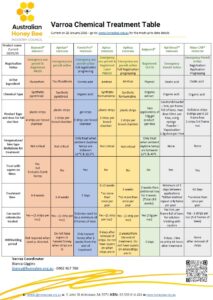
Refer to the AHBIC Varroa Chemical Treatment Table for a quick guide to modes of action and better treatment understanding.
CLICK HERE TO OPEN This Update IN PDF
You can reach out to AHBIC via:
National Varroa Mite Coordinator
Bianca Giggins
0402 467 780
AHBIC, its employees, executive and consultants expressly disclaim all and any liability to any person in respect of anything, and the consequences of anything, done or omitted to be done in reliance, whether wholly, partly, upon the whole or any part of the contents of this industry update document.