

AHBIC Biosecurity Update – Resistant Varroa Mite – 18 June 2026
18 June 202618th June 2026 Resistant Mite Spread Map The spread of resistant mites across the eastern seaboard has been traced and confirmed through the joint effort of affected beekeepers and state […]

18th June 2026
Resistant Mite Spread Map
The spread of resistant mites across the eastern seaboard has been traced and confirmed through the joint effort of affected beekeepers and state governments, along with comprehensive laboratory testing. As feared, the spread of both pyrethroid and amitraz resistant varroa mites are now clearly affecting the eastern mainland states.
The below map, courtesy of QLD DPI, dated 4 June 2026, clearly shows confirmed resistant properties in blue, spread from Queensland, through NSW, Victoria and South Australia.
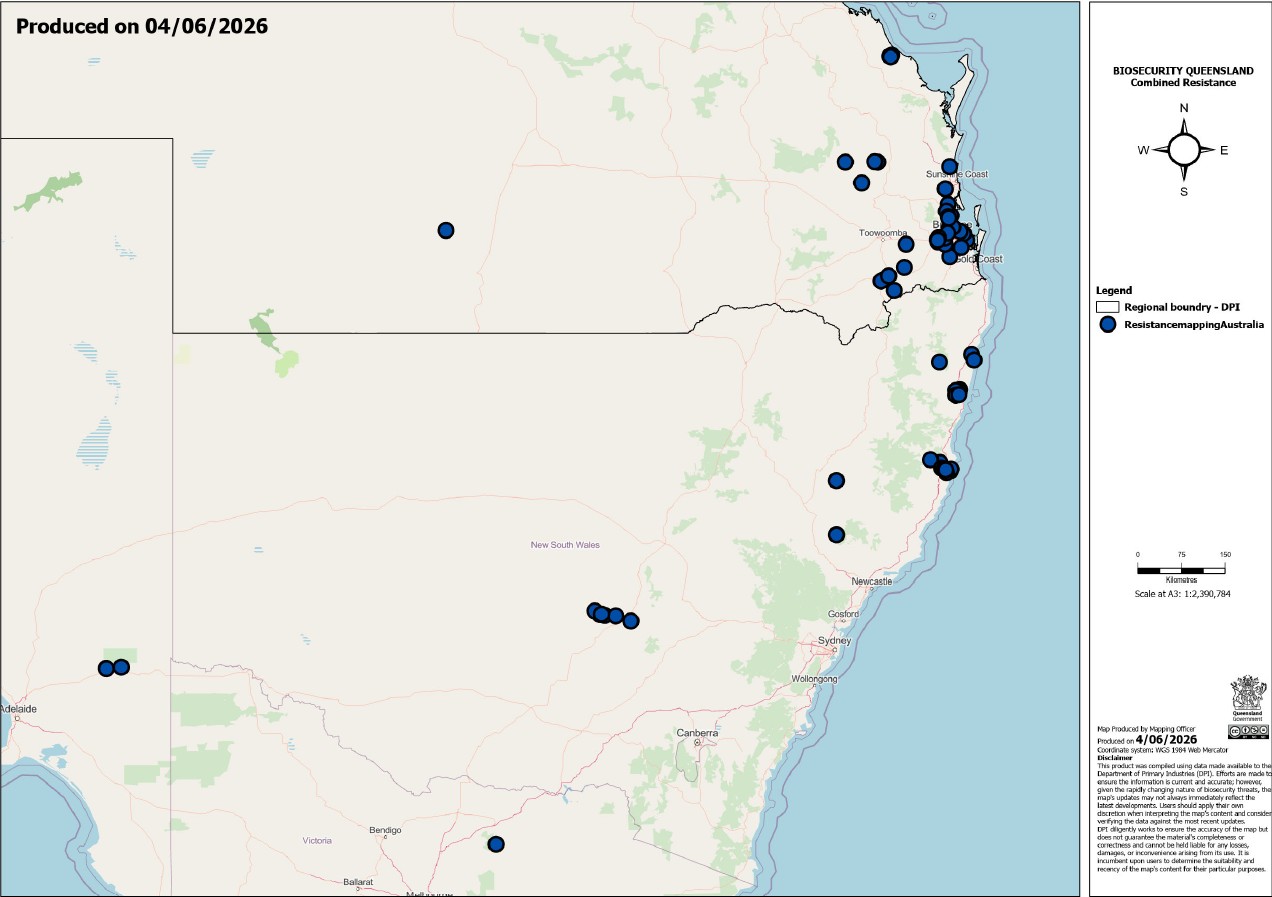
It is important to note that the map represents only government lab confirmed information, and it is believed there could be additional locations likely to be impacted than what appears on the map itself.
Key Priorities for Beekeepers
Beekeepers should anticipate the increased spread of synthetic resistant mites across the eastern seaboard over time. All beekeepers will eventually have lower efficacy from key synthetic control tools, and there will become an increased risk of high mite loads and colony losses across Australia.
The messaging remains consistent, it is more important than ever to ROTATE modes of action, and MONITOR mite numbers before, during and after miticide treatments and implement IPM strategies for varroa management.
If you suspect that pyrethroid or amitraz resistance-carrying mites are in your apiaries or in your area, you should act swiftly to test your colonies via state Bee Biosecurity Officer assistance or privatised testing facilities. Confirmed synthetic treatment failures will require changing management practices including integrated pest management and using primarily organically derived treatments to give your colonies the best chance of survival.
Refer to AHBIC Biosecurity Update 29th April here for resistance management advice.
It is never too early to test for resistance, be proactive to ensure colony survival.
Whilst testing is being offered by jurisdictions, AHBIC has been advocating for alternative testing options for determining resistance status in your hives that offers both economical and rapid commercial testing for resistance.
If you suspect resistance and are interested in testing, keep the contents of your mite wash.
Privatised testing is now available via D-central, details on their website D-central or email: beehealthy@d-central.au phone: (02) 8065 3994.
National Varroa Mite Spread Update
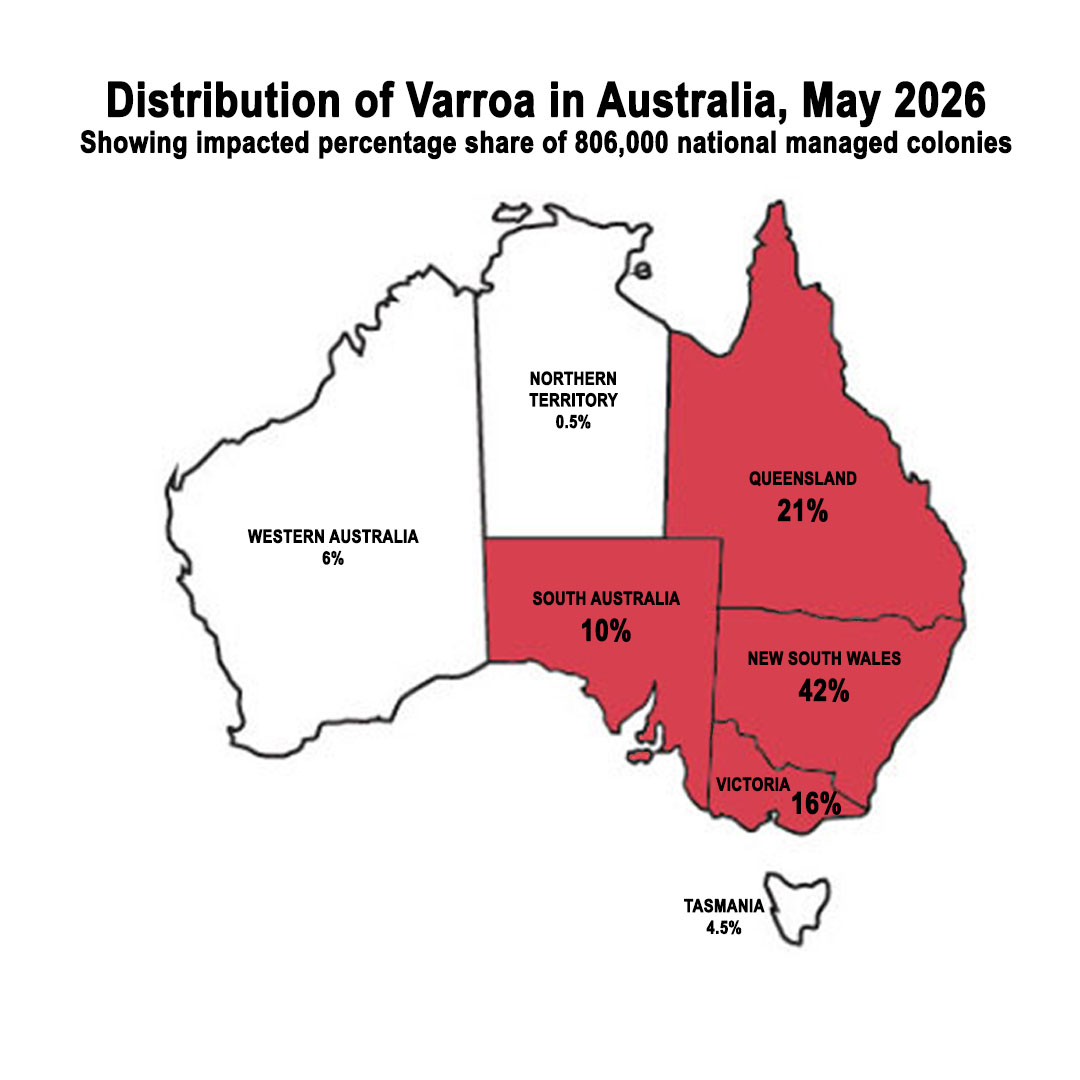
Confirmation of Varroa mite presence across Australia’s eastern states is represented in the below image. Highlighted in red, the states which are experiencing widespread varroa infestation as well as the percentage of national hive numbers within the state is listed.
Taking Care of Yourself and your Mates
We acknowledge that these ongoing challenges for our industry can be incredibly difficult to navigate. We encourage you to reach out to available resources for professional support if you feel you need it.
- Lifeline, 13 11 14
- Rural Aid (Mon to Fri 9am – 5pm), 1300 175 594
- Rural Financial Counselling Services
- Black Dog Institute
- Beyond Blue, 1300 22 46 36
CLICK HERE TO OPEN This Update IN PDF
Refer to the AHBIC Varroa Chemical Treatment Table for a quick guide to modes of action and better treatment understanding.
Bianca Giggins
Industry Development Manager
0402 467 780
AHBIC, its employees, executive and consultants expressly disclaim all and any liability to any person in respect of anything, and the consequences of anything, done or omitted to be done in reliance, whether wholly, partly, upon the whole or any part of the contents of this industry update document.
