Honey Bee
← Back

Newsletter Edition - September 2026

  • CEO Update September 2026

    CEO Report September 2026

    The last two months have seen AHBIC taking the pressures facing beekeepers directly to government, while continuing the practical work on treatment access, pollination and the Australian Colony Loss Survey. As spring gets underway, the cost of keeping colonies healthy and getting them ready for the next job remains front and centre. These are the issues we are bringing to every discussion about the future of our industry.

    Taking our case to Canberra

    A highlight this month was meeting with the federal Minister for Agriculture, Fisheries and Forestry, Julie Collins, and the Shadow Minister, Darren Chester, at Parliament House on 7 September. These meetings were an opportunity to put the realities facing beekeeping businesses directly before both sides of politics and seek a coordinated national response.

    Our message was straightforward. Beekeepers are carrying substantial additional treatment and labour costs, managing colony losses and trying to maintain the strong hives that Australian agriculture relies on. The consequences extend well beyond honey production. When a beekeeping business loses capacity or leaves the industry, the growers who depend on its pollination services are also exposed.

    We took practical requests to Canberra: targeted, time-limited assistance with Varroa treatment costs; stronger action on imported-honey authenticity and the assessment of Deformed Wing Virus risks; and clear responsibility within the Department of Agriculture, Fisheries and Forestry for progressing the national roundtable actions. Access to effective and affordable treatments remains central to that discussion.

    With Darren Chester, I also stressed the need for bipartisan support. Beekeepers need governments to work together on solutions that can be delivered, with clear responsibilities and timeframes. Following the meeting, I provided his office with a further briefing on the pressures facing the industry and the implications for pollination and food production.

    Getting these issues in front of the Minister and her shadow counterpart matters, but the measure of success will be what changes for beekeepers. We will continue pressing for practical support and keep members informed as those discussions progress.

    Following through on the roundtable

    The Decision Makers Forum on 28 July considered the 11 priority actions developed through the national honey bee industry roundtable process. Industry and research partners committed to progressing work, including treatment coordination and better information on pollination supply and demand. Disappointingly, governments did not bring forward the additional commitments we had sought to match the scale of the problem. 

    The work has continued through discussions with state associations, governments, research partners and pollination-dependent industries. The roundtable has given us a common set of practical requests to take into those discussions, including the Canberra meetings. Our focus is on turning that shared position into help that reaches beekeeping businesses. 

    Varroa treatment access

    Treatment cost, availability and performance continue to take up a significant part of our work. AHBIC has remained engaged on permits, registrations and access to chemicals, including discussions in September. We are pressing for workable regulatory pathways and clearer coordination so beekeepers have a wider range of suitable options. 

    We are also taking the industry’s research needs back to AgriFutures. Beekeepers need evidence about how treatments perform under Australian conditions, what different management approaches cost, and how to interpret resistance testing alongside what is happening in their hives. Research needs to lead to guidance that can be used in a commercial operation. These priorities formed part of the update we have prepared for the Honey Bee and Pollination Advisory Panel. 

    Pollination and honey market integrity

    The almond season has brought further concerns about the availability of suitable colonies and how hive strength is assessed. AHBIC has taken up concerns about hive audits and continued discussions with the crop industries that rely on managed pollination. Growers need confidence in the service they are buying, and beekeepers need clear, fair and consistent expectations. 

    We still do not have a complete national picture of pollination supply or colony losses. Reports from individual businesses are valuable, but they cannot tell us the size of the problem across the country. Better information will help us explain the pressures on pollination businesses and make a stronger case for investment and support. 

    Imported honey remains another priority. We met with the Department of Agriculture, Fisheries and Forestry in August on honey authenticity and have continued pursuing the biosecurity questions around Deformed Wing Virus in imported honey. These are separate but equally important issues: Australian beekeepers should be able to compete in a market where honey is what it claims to be, and import conditions need to properly consider risks to our bees. 

    Australian Colony Loss Survey 

    Bianca has been leading the detailed work to get the Australian Colony Loss Survey ready, working with Pike Stahlmann-Brown on the questionnaire and programming, and Cooper Schouten at Southern Cross University on the ethics process. The survey has progressed through design and testing, with further information now being provided for ethics review. It will open once the necessary approval and participant information are in place. 

    This is an important piece of work for the industry. We need a more consistent picture of colony losses and management practices so that our discussions with governments and researchers are backed by better evidence. When the survey opens, I encourage beekeepers to make time to contribute, whether your losses have been high, low or somewhere in between. A broad response will make the results more useful. Join the mailing list here: COLOSS

    The wider industry work

    Alongside the immediate Varroa pressures, work continues on levy reform, including the ballot arrangements and communications needed to explain the proposal to beekeepers. There is still preparation to complete before the industry is asked to vote. It is important that people understand what is proposed and have a fair opportunity to have their say. Take a deep dive on levy information on our dedicated industry levy page.

    We have also continued contributing to the review of the Emergency Plant Pest Response Deed, the national agreement that sets out how plant pest emergencies are managed and funded. The experience of Varroa needs to inform how future responses work for our industry. Workforce discussions and our submission on the classification of beekeeping occupations are another part of this less visible work, aimed at ensuring the skills and needs of beekeeping are properly recognised. 

    The Month Ahead

    Over the coming month, our priorities will be following up the Canberra discussions, progressing treatment access and the roundtable actions, and getting the colony loss survey ready to open. We will also continue the levy reform preparations and discussions with research partners about the work that will make the greatest practical difference to beekeepers. 

    Thank you to the state associations, our Executive and the many beekeepers who continue to share their experiences with Bianca and I. That information helps us keep the national work grounded in what is happening in the paddock. I hope spring provides some welcome opportunities, your bees build well, and you travel safely through the busy months ahead. Please keep looking out for each other.

    Danny LeFeurve

    CEO
  • Honey Trace – A Honey Traceability System to Protect Australian Honey

    Article by Alan Dorin Monash University, September 2026.


    To achieve premium prices for Australian honey, we need it to become a trusted global brand. Our native flora, extensive forests and wilderness areas are prized overseas for their potential to produce world class honeys of unique character. But honey fraud is of ongoing global concern. Many buyers are turning to their local products to reduce the likelihood of buying adulterated or mislabelled international honey. How can we convince them that Australian honey is authentic, and every bit as pure as we claim? The answer lies in a honey traceability system.

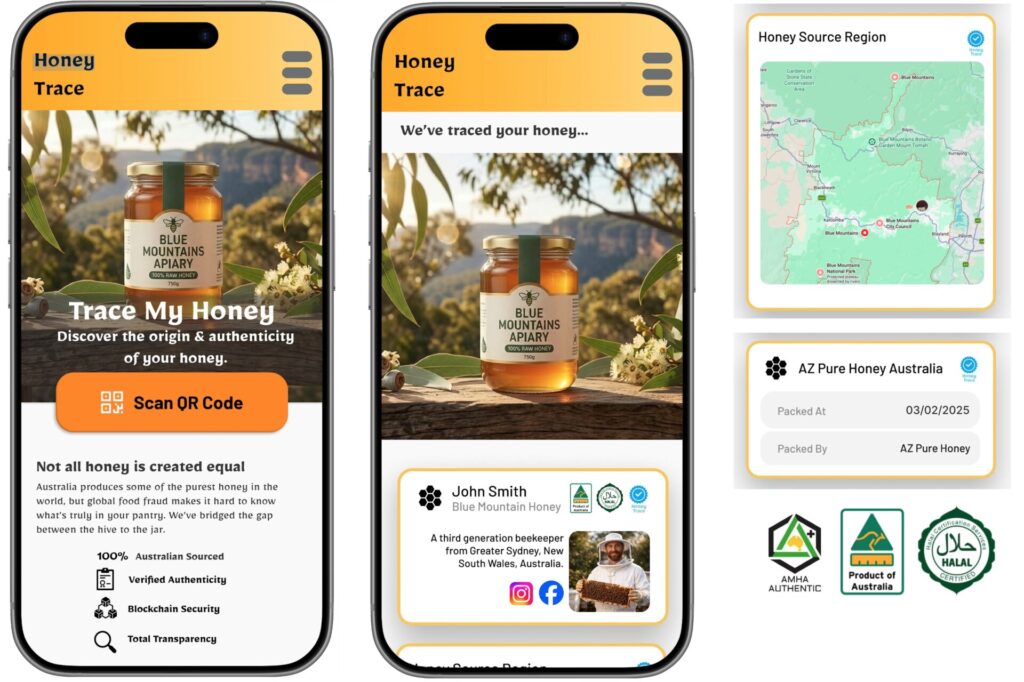
    Monash University and the Northern Territory Government Department of Agriculture and Fisheries have developed Honey Trace. This is a honey traceability system that follows honey from Australian beekeepers along national or international supply chains, through to the kitchen table of its consumers. It allows the consumers of our products to verify that the honey they have purchased is genuine.

    This project received grant funding from the Australian Government’s Department of Agriculture, Fisheries and Forestry under the Building Trust in Australian Agricultural Traceability and Credentials in Southeast Asia program, and was supported by AHBIC.

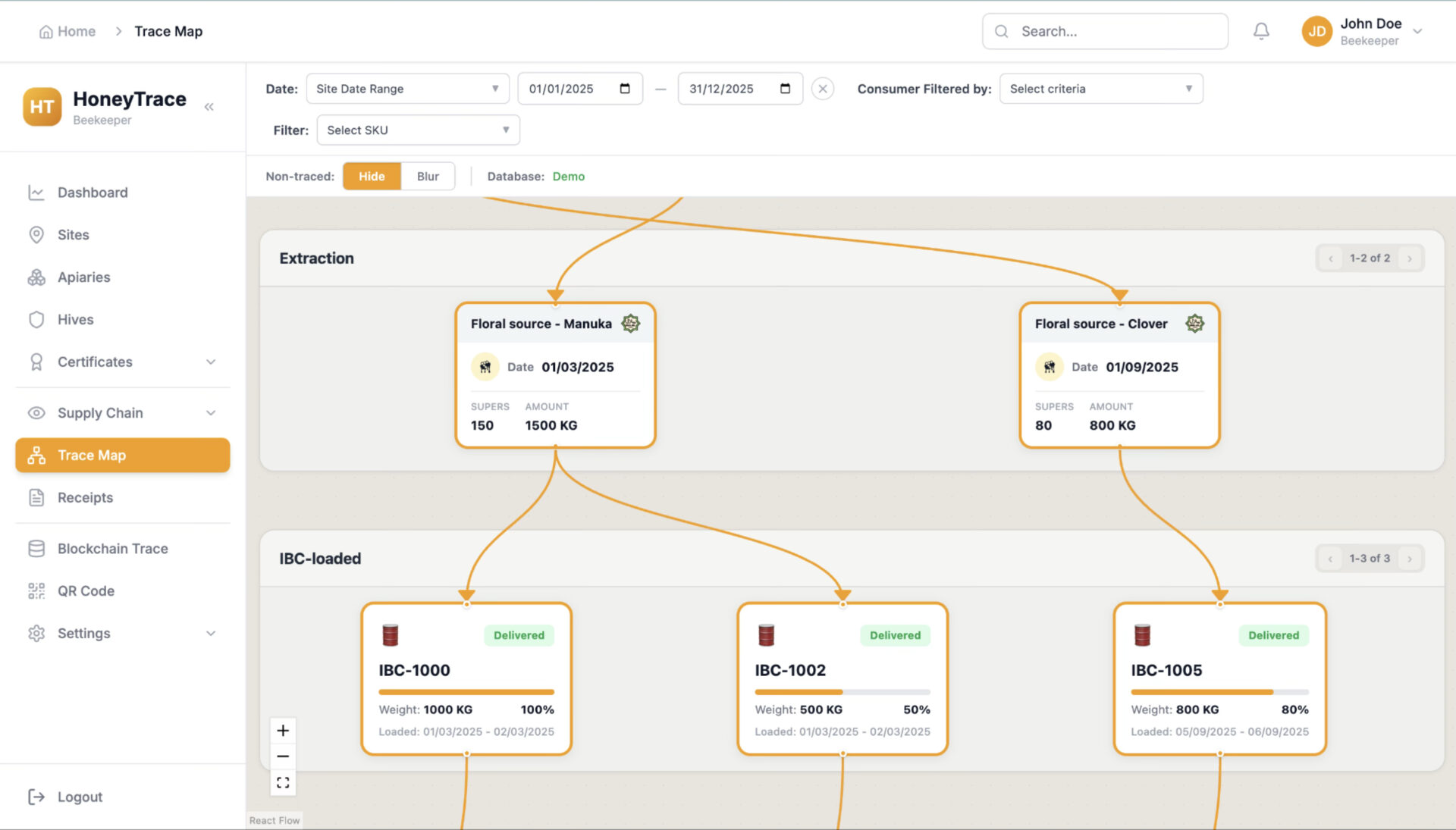
    Screenshot

    Research and development was driven by stakeholder engagement with Australian beekeepers, bee and honey technology developers, honey packers, Southeast Asian distributors, Australian honey certification bodies, and AHBIC.

    Honey Trace provides capabilities at the cutting edge of global systems for food traceability and provenance verification. It supports mass balance checking, secure collection of digitally verified apiary and honey extraction data and certification management. The system enables beekeepers to control and negotiate data sharing within a supply chain, and ultimately to trace national and international honey movement and sales. The system is backed by simple, efficient QR code scanning, blockchain security and cloud data accessibility that operates on mobile devices with or without internet connectivity, and from the desktop via the web. By storing its data using blockchain, Honey Trace’s ledger provides a globally approved, digitally authenticated and independent method to ensure supply chain data is tamper-proof. It enables stakeholders to check claims about Australian honey’s provenance and authenticity. It is reconfigurable to allow for the introduction of new secure traceability technologies as they emerge.

    Features of the system include:

    • Site creation and apiary movement management.
    • Extraction and IBC data collection.
    • Certification inputs (e.g. B-Qual, Halal Certification)
    • Honey trait data entry
    • Honey blend information management
    • Batch number allocation (automatic or manual)
    • QR code generation for apiaries, IBCs, packing boxes, honey labels
    • Dispatch and receival information entry
    • Inventory availability records
    • Customer profile data
    • Beekeeper profile visibility to customers (optional, under beekeeper control)

    Honey Trace was recently tested end-to-end under simulated conditions by an Australian beekeeper and a large commercial Australian honey packer. A simulated sales order was shipped and tracked to a Southeast Asian distributor and retailer where it was followed to a consumer in Singapore. The project has been demonstrated and presented at state apiary association conferences and field days in NSW, Victoria and the Northern Territory.

    We are now seeking interested parties to move the project on to the next phase enabling it to become a viable system for Australia’s honeybee industry.

    If you’re interested in being involved in any way, please contact the project lead, Alan Dorin by email on alan.dorin@monash.edu. We’d love to hear from you.

  • 2026 Australian Colony Loss Survey : opening soon!

    The 2026 Australian Colony Loss Survey is back!

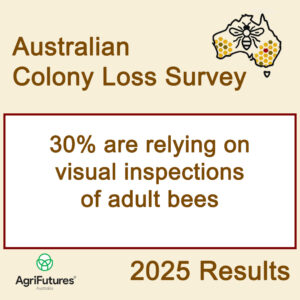
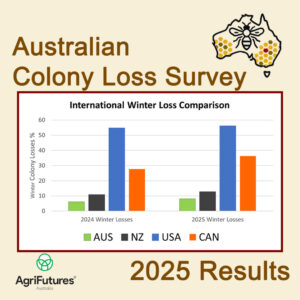
    The Australian Colony Loss Survey established in 2025, provides empirical data to support Australian beekeepers to make informed business decisions, particularly regarding the management of honey bee pests and diseases. The results of the survey are used to facilitate national extension efforts and peer-to-peer learning and knowledge transfer from beekeeper to beekeeper. The survey provides a baseline for colony health and management practices, allowing beekeepers to benchmark their own operations and help them to adopt best practice management.

    Through fit for purpose extension materials, and clarity in messaging for specific target audiences (e.g. commercial beekeepers), this project will demonstrate what impact pests, diseases and management practices are having on hive health, and what mitigation techniques are working for beekeepers.

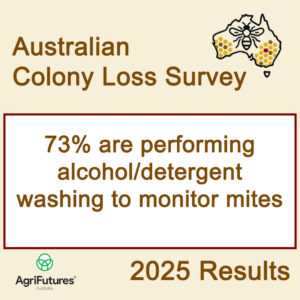
    Over 750 beekeepers from across Australia took part in the 2025 Survey, giving us vital information about the most important current issues in Australian beekeeping. In this 2026 round, we’re hoping to hear from even more beekeepers! 

    The Survey is your chance to tell the industry, government and researchers about the biggest challenges you faced as a beekeeper in 2026. Together, we can work out management strategies for them that will ensure a vibrant Australian honey bee industry for the future. 

    The survey is for anyone and everyone who keeps bees anywhere in Australia and is completely anonymous.

    The Project will be lead by Bianca Giggins from the Australian Honey Bee industry Council, and the team will build on previous surveys to further refine the questions to provide invaluable longitudinal data allowing industry and researchers to track and identify emerging threats and trends.

    Register your interest here: Australian Colony Loss Survey 2026 – Register for further Information – Fill out form

    Last years results are here: Australian Honey Bee & Pollination Industry National Colony Loss Survey 2024 and 2025 key results | AgriFutures Australia


    AHBIC will bring more details in the coming weeks as we are busy preparing for the 2026 launch!


  • The updated Code of Practice

    Article by Rod Bourke, Bee Biosecurity Officer, NSWDPIRD, for the Amateur Beekeepers Association, shared with permission.


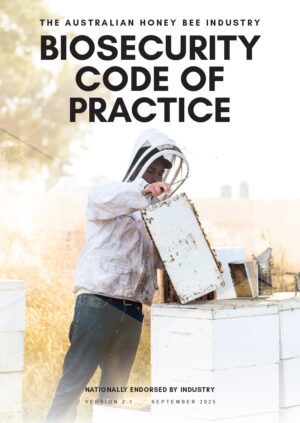
    The Australian Honey Bee Industry Biosecurity Code of Practice (the Code) was developed and nationally endorsed by all Australian beekeeping member bodies of the Australian Honey Bee Industry Council (AHBIC), which includes the ABA, around 10 years ago. Since then, it has been widely adopted by many states including NSW as a condition of registration. This means, that as a beekeeper (someone that has even just one bee colony) you are legally required to be registered and to follow the management guidelines as set out in the Code. 

    The Code provides a clear management framework for Australian beekeepers to apply best practice biosecurity measures on every hive. A broad range of people with varying personalities and skill levels like to keep bees, so the Code is a guideline to ensure that everyone manages their bees to a certain standard. This aims to reduce the biosecurity threat to the beekeepers own bee colonies as well as to all others around them. Biosecurity is a shared responsibility, so every beekeeper has an obligation to do the right thing and reduce the opportunity for risks to emerge from within their own operation. 

    Many beekeepers tend to get swept up in the charm of beekeeping (and selling a bit of honey) and may over time get a bit carried away with the number of hives they actually have buzzing around the place. When this is tied in with life’s many other commitments including family, work and recreation the bees often end up getting far less attention then they require or deserve. This can also mean that the care provided is less than that outlined in the Code as the bare minimum they should be receiving. 

    If you are not following the Code’s level of hive management then it is likely that you will be getting far more swarming, failing queens, non-productive, diseased, slimed or wax mothed hives than you should be, resulting in a lot less honey per hive. You would also be passing these problems on to others by breeding up pests like small hive beetle or enabling robbing of your poorly managed colonies that then spreads American foulbrood (AFB). 

    If you are not cleaning up, sorting and storing your equipment properly, then your equipment and weak or dead colonies end up becoming exposed and the resultant robbing causes someone else’s colony to get AFB, and it just keeps going around and around. The Codes objective is to reduce all that. 

    With the advent of varroa into Australia the amount of work required to keep a hive alive has also increased dramatically, so as part of the Transition to Management Program (T2M) the Code was given an upgrade (along with the Biosecurity Manual) to align with the new challenges beekeepers are facing (or soon may be) in much of Australia.  


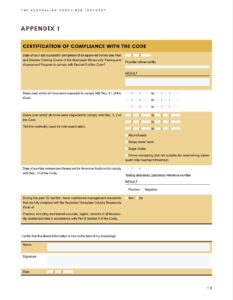
    Both these items as well as an updated editable Appendix 1 form can be found here Biosecurity – Australian Honey Bee Industry Council 

    Main changes from the original Code 

    So, what are the main changes from the original Code, and why do they matter? I asked Bianca Giggins, Industry Development Manager at AHBIC to give me a quick rundown of these changes which she lists as follows. 

    “The simplest way I like to summarise is to view the new fillable PDF Appendix 1. 

    The addition of 3 inspections for 3.1 & 3.2 are the biggest changes, along with reducing the required number of hives needed to follow the Appendix 1 down from 50 to 20 hives managed. 

    PART B (All Beekeepers) 

    Section 3 

    3.1 – inspect each hive in the apiary 3 times every year (up from 2 previously), at a minimum of 3 consecutive calendar months apart (was previously 4 months apart). 

    3.2 – In areas where varroa is not established, arthropod pest (including Varroa and Tropilaelaps mites) inspection of 1 hive per apiary, 3 times per year, spring, summer & autumn, including alcohol wash, soapy water wash, sugar-shake or drone uncapping, recording the method/s used. 

    3.3 – In areas where Varroa mite is present, more frequent inspections and tests should be completed to determine whether mite loads have reached treatment thresholds. –THIS POINT IS NEWLY ADDED. 

    Section 5 

    5.1 b) What Varroa mite test method was used including date of test and test results as per Part B 3.2. 

    1. c) Details of all treatments and actions taken to manage any pests or diseases in the apiary.

    PART C (Beekeepers with 20 or more hives now have to follow all conditions set out in Part C) 

    9.2 a) Biosecurity for Beekeepers BOLT training has been renewed: Biosecurity Online Training (BOLT) | Plant Health Australia” 


    So why does any of this matter to a recreational beekeeper or ABA member?  

    As many of you may have heard or seen for yourselves the introduction of varroa has very much changed beekeeping for all of us, with many losing their hives and many others losing hope to carry on with keeping bees.  

    Varroa makes it very difficult for some beekeepers who perhaps don’t have enough time, skills or luck to manage mite levels well enough and keep their bees alive, but at the same time many others have concentrated on managing varroa and mostly forgotten about all the other pests and diseases that were already here before varroa.  

    Many of these older issues are still a major threat to bee health and the Code has increased the requirement of brood inspections so that beekeepers are more compelled to manage their brood box adequately, because we all know that under the old Code that 2 brood inspections per year was not nearly enough to always run good bees. 

    Bee Biosecurity training is always an important aspect towards managing better healthier bee colonies, and it is concerning that even after varroa has been present for 4+ years that there are so many beekeepers who still haven’t undertaken any training at all. The Bee BOLT training is free to all beekeepers as the BBO programs fund its yearly operating costs, so please undertake it, even if you only have 1 hive or are new to beekeeping. 

    By reducing the hive numbers from 50 to 20 hives for completing the Appendix 1 requirement, the Code has been able to encompass literally thousands of additional beekeepers who have been running more hives than they probably should have without getting additional training skills, as well as compelling them to be looking for AFB more thoroughly.  

    Bee Biosecurity Officers are here to assist beekeepers to understand and follow the Code, so if you need assistance with any area of the Code please contact me at rod.bourke@dpird.nsw.gov.au or 0438 677 195 


  • Friends of AHBIC

    If you aren’t already a Friend of AHBIC, we welcome you to join our group of organisations and individuals who are supporting Australia’s national beekeeping industry that supports you.

    BECOME A FRIEND

    OUR CURRENT FRIENDS

  • B-QUAL

    B-QUAL is an Industry Owned Quality Assurance System for Australian beekeepers.

    How does B-QUAL certification benefit my business?

    • Product integrity
    • Quality Assurance
    • HACCP based certification
    • Regulatory compliance
    • Industry best practice
    • Biosecurity
    • Access to domestic and export markets

    B-QUAL Certification also enables an enterprise to market its product under the B-QUAL logo to show that it meets the B-QUAL Industry Standards.

    Complete your training at home at your own pace.

    For more information and to obtain a Certification Information Pack, contact the B-QUAL Certification team.

    www.bqual.com.au
    B-QUAL Pty Ltd
    Phone 07 49949820
    Email: admin@bqual.com.au