National Schools Food and Fibre Education Strategy
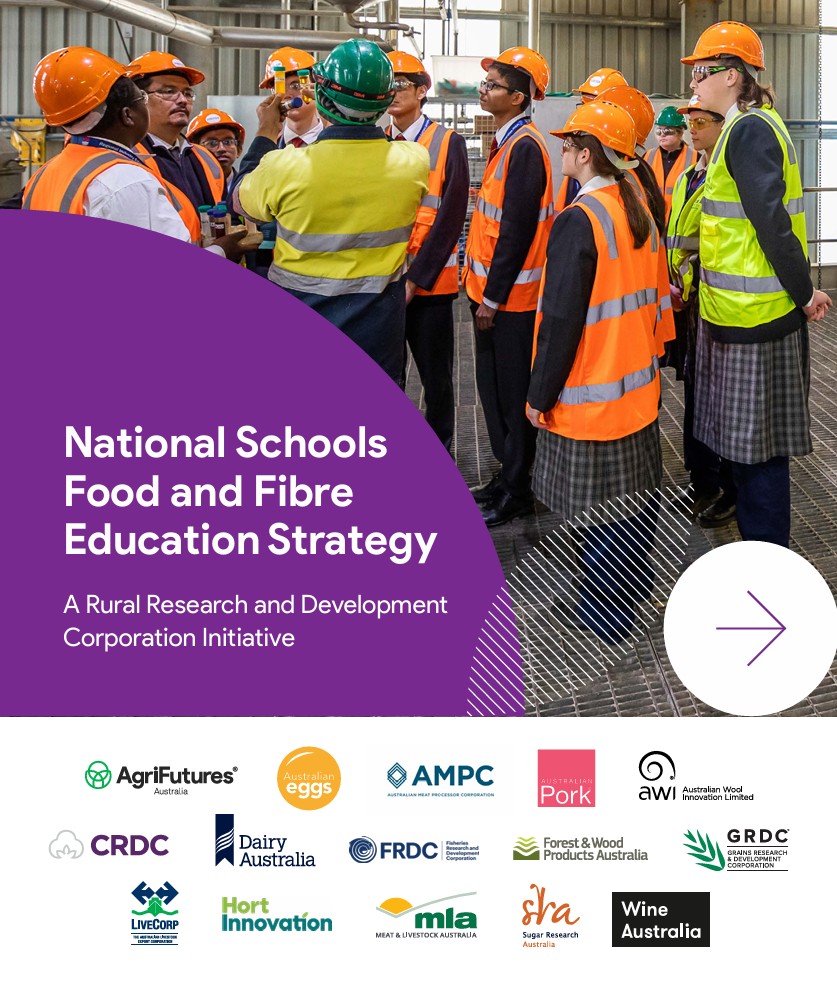
AgriFutures in partnership with all the RDCs has launched the National Schools Food and Fibre Education Strategy.The Strategy is a first-of-its-kind collaboration between 15 rural research and development corporations, designed to reconnect Aussie kids with the food and fibre sector that powers our economy. This Strategy sets a bold vision:empowering students and educators to champion a sustainable, thriving food and fibre sector across Australia.
Key priorities:
Strengthen school–industry connections
Inspire and equip educators
Secure government support and investment
Why this strategy matters:
Outdated public perceptions: nearly one in five Australians believe rural industries have seen little change in the last 50 years.
Low levels of agricultural knowledge: nearly 80% of primary students and 60% of secondary students mistakenly identified hand milking as a current technique used in commercial dairy production systems.
Urban–rural divide: with close to three-quarters (73%) of Australians living in major cities, there is a disconnect between urban and rural communities.
Trust in sustainable practices: just 53% of Australians agree that farmers, fishers and foresters manage their environmental impacts effectively
Click on the image above to open the strategy. The Strategy reflects feedback from 900+ stakeholders and outlines a staged approach for schools, industry, and government.
CEO Update November 2025
CEO Report November 2025
Over the last month Bianca and I have been busy responding to many inquiries and supporting industry as varroa continues to impact beekeepers across the country. Varroa is moving slowly across the country with recent detections in South Australia and beekeepers in Victoria and Queensland reporting detection across much of those states.
Low honey production across the southern regions is still impacting beekeepers particularly through South Australia. Production through NSW into Queensland appears to be reasonable. A combination of increased exports and lower national production has reduced the national honey inventory. This has resulted in a modest price increase from the countries largest packer, hopefully a sign prices might recover.
National Biosecurity Forum
Earlier in November I travelled to Canberra to participate in a National Biosecurity Forum to discuss biosecurity system reform. The one-day workshop had biosecurity leaders from both government and industry in the room. The rich discussion proved productive, as it worked through the current challenges and potential solutions.
The increasing frequency and complexity of emergency plant pest detections over the last decade is stretching the system. Within the plant system, which includes honeybees, there has been 135 notifications to CCEPP of new pests with 18 of those becoming active responses. Honeybees represent a significant amount of those 18 responses over the last decade with varroa, red dwarf honey bee, Asian honey bee etc.
Beekeeping in the Northern Territory
AHBIC has been actively working with NT famers and the NT government to facilitate the establishment of an NT beekeepers’ association. AHBIC has agreed to establish a subcommittee to investigate the feasibility of establishing an association. The first meeting which will include as many NT beekeepers as possible, NT farmers and NT government and is scheduled before the end of year.
Skill Shortage Lists
We have been receiving inquiries from industry about the recent publishing of the Occupation Shortage Lists (OSL) in which the honeybee industry has recently been removed. In 2024 AHBIC worked hard to get the honeybee industry back on the OSL list in which we were successful but unfortunately, we have dropped off again. This potentially can impact training funding and subsidies for courses domestically.
The OSL list is determined by the number of advertised job vacancies within our industry and how long they take to fill. This form of measurement is not conducive with how our industry operates and requires a significant and sustained effort from AHBIC to maintain our presence on the list and despite this effort, at times we may still not meet the criteria set by Skills Impact. The consultation for this list opens again in January and it will be important for industry to provide submissions and survey responses to ensure the honeybees are re-instated to the list.
Conversely the Core Skills Occupation List (CSOL) is a separate list that informs government around many policies including skilled migration visa requirements. AHBIC has provided a submission to this list in September and continues to correspond when reviews return again, often on a quarterly basis.
Palm Workers Scheme
The Chair, Jon Lockwood and I met with the Department of Employment and Workplace Relations (DEWR) to discuss the limitations of the PALM scheme for the beekeeping industry. As a result of the meeting DEWR have committed to investigating the possibility of modifying the accommodation requirements to better suit our industry. We look forward to progressing these issues and increasing the utilisation of the PALM scheme in our industry.
The Month Ahead
Leading into Christmas we are working to prepare the levy reform communications ready to launch in the new year. Whilst we hoped to have information out to industry before the end of year time has run away on us.
Due to much of the AHBIC team having a well-earned rest over the Christmas period it is unlikely that we will send out a December newsletter. So, I would like to wish everyone a safe Christmas and I hope the new year brings more honey flows and better honey prices.
Danny LeFeurve
CEO
Development of Ecofriendly Selective Pesticides to Safeguard Honeybees
Of the 100 crop varieties that provide 90% of the world’s food, 71 are pollinated by bees (1).
However, the recent invasion of Varroa destructor – a mite that parasitises honeybees – poses a serious threat to the health of honeybee populations and the productivity of horticultural industries (2). As part of an effective strategy to deal with this incursion, more specific and effective pesticides would be a valuable weapon. However, most pesticides currently used in agricultural applications work non-selectively against both pests and beneficial arthropods. A selective pesticide that is harmful to Varroa but safe for honeybees would therefore provide a valuable weapon in our arsenal and might also be a starting point for the development of pesticides that target other harmful mites.
In order to design pesticides that display significant selectivity, a target-based approach can be employed. This strategy leverages protein biochemistry, genomics, structural biology, toxicology and chemistry to identify molecules that interact with specific biological targets. In this context, a hormone binding protein in the Varroa mite known as the ecdysone receptor protein is a promising target for pesticide development. This protein interacts with the pest hormone ecdysone to regulate mite development, reproduction and behaviour (3). Disruption of this interaction by designed chemicals would significantly impair mite development and reproduction, (4) meaning that such chemicals could be potent pesticide candidates. Also, because this receptor is absent from vertebrates and is also subtly different between insects, chemicals targeting this receptor would be safe for farm workers, consumers and also beneficial insects such as honeybees. Such chemicals can also be applied in conjunction with current insecticides to improve potency and reduce the development of resistance.
Our research at The University of Sydney, led by Prof Joel Mackay, Prof Ron Hill and Dr Emily Remnant and funded by Hort Innovation and a generous philanthropic donation, aims to develop such a selective insecticide. Already, we have made considerable progress on this quest. We have identified and purified significant quantities of the Varroa ecdysone receptor protein and also the corresponding protein from the honeybee through a laboratory-based protein production process. We have used an array of experimental methods to demonstrate that these lab-generated receptor proteins can interact with the ecdysone hormone and can therefore be used as targets for pesticide development.
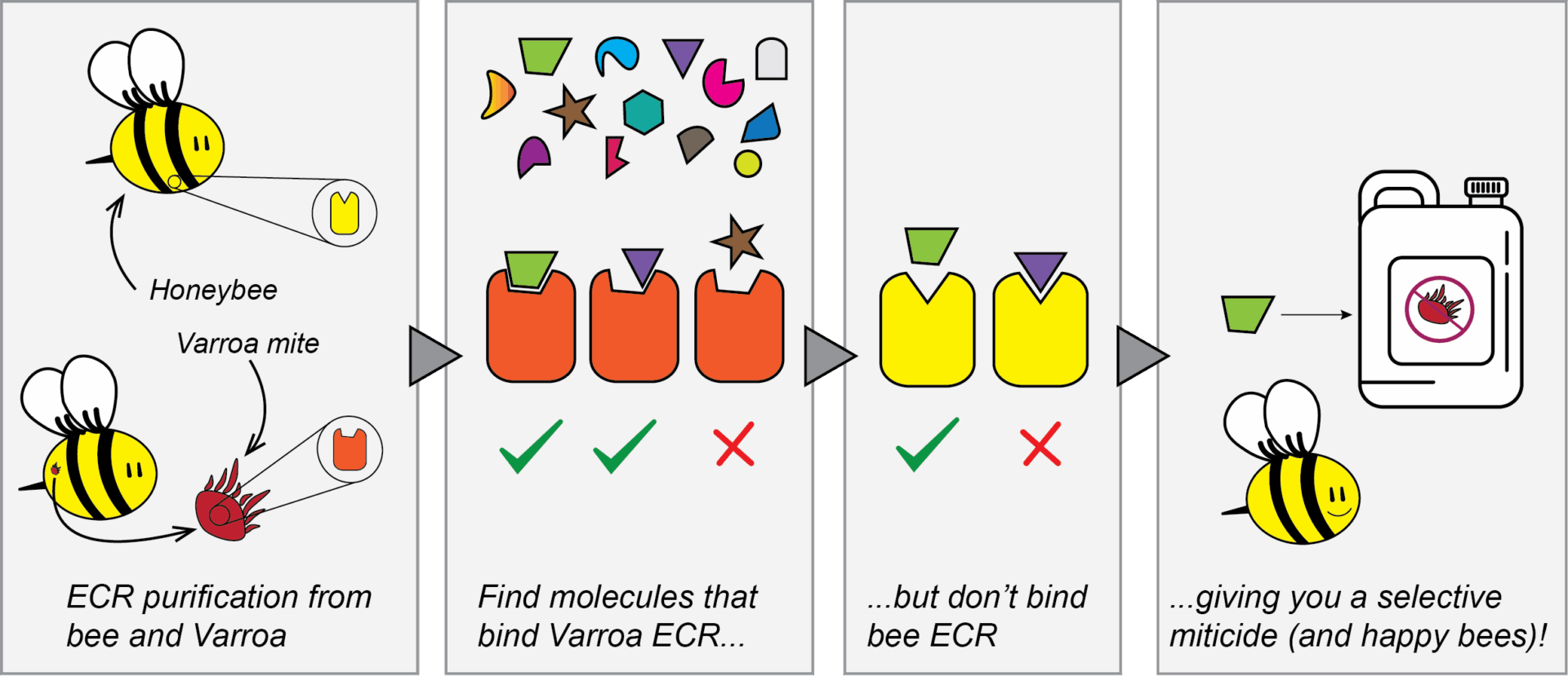
With our target in hand, we have recently commenced the search for chemicals that can hit that target. Our strategy is to search collections of thousands of commercially available chemicals to find that needle in the haystack – a chemical that potently interferes with the Varroa ecdysone receptor but does not interfere with the equivalent target in the honeybee (and so is safe for our beloved pollinators – see figure).
Excitingly, we have already discovered several ‘hits’ – chemicals that are starting points on that journey. The best hits can interact with the Varroa receptor more effectively than they interact with the honeybee receptor – exactly the type of selectivity that we are chasing. Time will tell whether these starting points can be honed to yield our holy grail: a pesticide that can be deployed against Varroa without harming honeybees.
Concurrently, we are using this strategy to target another pollinator pest – the small hive beetle. To date, we have already purified and characterized the hormone receptor protein from the beetle and are on track to follow in the footsteps of our Varroa work. We hope that this new approach to pesticide design offers a competitive route to the identification of safer, more selective and environmentally friendly agents for the control of insect and arachnid pests, thereby helping to protect global agricultural systems.
Article written and supplied by:
Shahnaz Sultana, Emily Remnant, Ron Hill, Joel Mackay
School of Life and Environmental Sciences, The University of Sydney
“Development of Ecofriendly Selective Pesticides to Safeguard Honeybees” is funded by the Hort Frontiers strategic partnership initiative developed by Hort Innovation, with co-investment from the University of Sydney and contributions from the Australian Government.
References:
Nabhan, G. P., & Buchmann, S. L. (1997). Services provided by pollinators. Nature’s Services: societal dependence on natural ecosystems, 133-150.
Goulson D, Nicholls E, Botías C, & Rotheray EL (2015) Bee declines driven by combined stress from parasites, pesticides, and lack of flowers. Science. 347(6229):1255957.
Jack CJ, Kleckner K, Demares F, Rault LC, Anderson TD, Carlier PR, Bloomquist JR & Ellis JD (2022) Testing new compounds for efficacy against Varroa destructor and safety to honeybees (Apis mellifera). Pest Manag Sci. 78(1):159-165.
Hamaidia, K., & Soltani, N. (2016). Ovicidal activity of an insect growth disruptor (methoxyfenozide) against Culex pipiens L. and delayed effect on development. Journal of Entomology and Zoology Studies, 4(4).
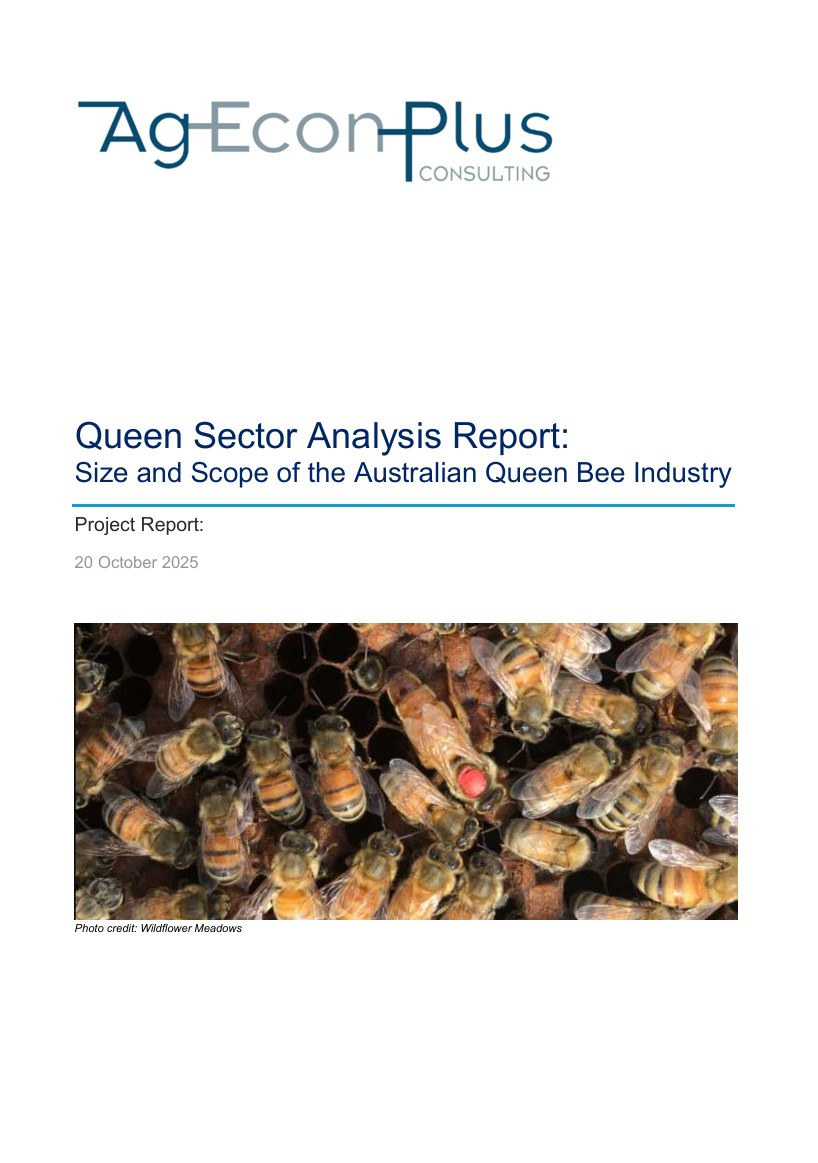
Queen Sector Analysis Report: AgEcon Plus funded by The National Varroa Mite Management Program
This project was funded by the National Varroa Transition to Management Program on behalf of their members and managed by the Australian Honey Bee Industry Council.
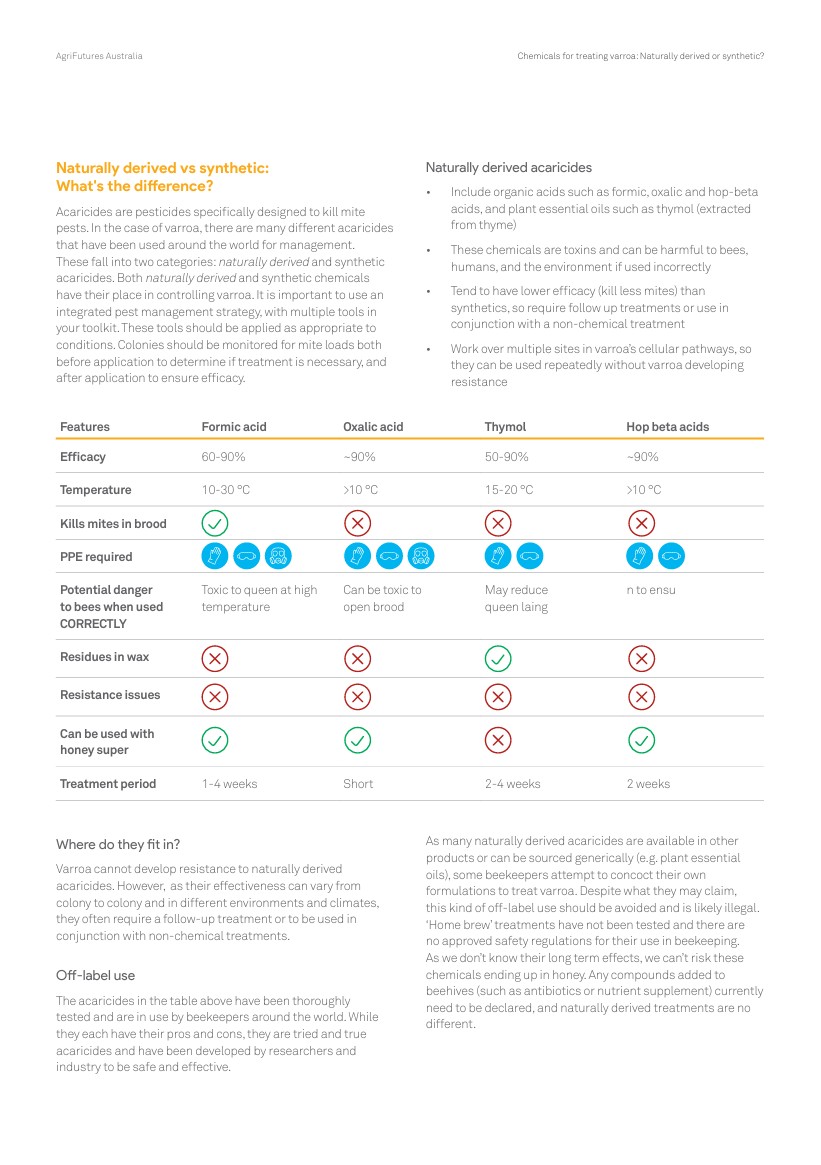
Executive Summary
This report on the Australian queen bee sector was funded under the National Varroa Transition to Management Program. It was to profile the sector, identify barriers to growth and deliver actionable recommendations.
The queen bee sector consists of queen breeders who practice genetic selection, queen producers who mass produce queens, and queen buyers – commercial beekeepers, recreational beekeepers and overseas beekeeping industries. Products range from queen cells which sell from as little as $8 through to artificially inseminated breeder queens priced at $2,000 or more.
The industry is nationally distributed with the population of queen suppliers (breeders and producers) aligning with the number of hives in each state. The largest number of beekeeping operations is found in northern NSW and southern QLD.
There is no published data on the number of participants in the industry or the value of the sector. The best estimate of size and value is 63 queen suppliers and a gross value of production (GVP) of $8.8 million. The Australian Queen Bee Breeders Association (AQBBA) reports that GVP may be as high as $17.6 million.
Engagement Activities from the Tasmanian VDO on King and Flinders Islands
Article by: Tasmanian VDO Carson McGinty
In July and August 2025, Tasmanian VDO Carson McGinty travelled to King Island and Flinders Island to meet with beekeepers both commercial and recreational with a focus on varroa extension and education, surveillance, and management.
While there Carson also strengthened the detection capacity of the state by acquiring and setting up new sentinel hives at Port Grassy on King Island, and Port Lady Barron on Flinders Island.
Carson was assisted in contacting local beekeepers and the set-up of the sentinel hives by Tasmanian Biosecurity Officer Jason Pierce, located on King Island, and Tasmanian Biosecurity Officers Phil Smith and Daniel Whiting on Flinders Island. Their local knowledge and relationships with beekeepers on the islands were critical in enabling contact and engagements with the diverse and at times rather geographically isolated beekeepers on the islands.
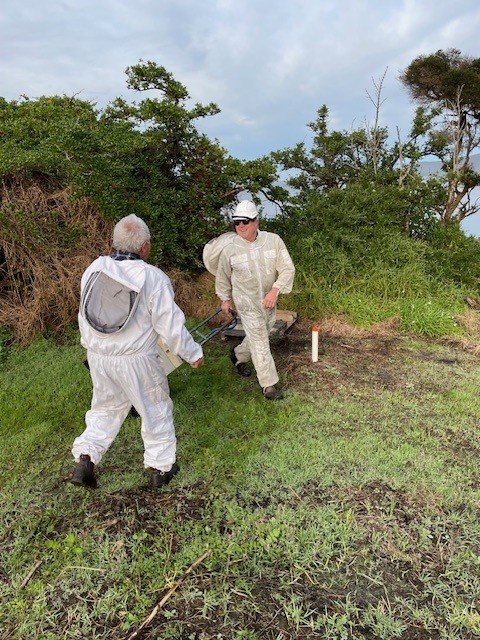
Dan Whiting (Biosecurity Tas) and a local beekeeper setting up the sentinel hive on Flinders Island.
A workshop was held in the evening during each visit where we went over the threat of varroa, its biology, how it spreads, and the mechanical and chemical management techniques available. Carson also developed and supplied individualised Varroa treatment plans that were tailored to the climate of the islands. Carson also provided ample time for Q & A as this is the place where it is best to identify the knowledge gaps regarding varroa, as well as ease any fears regarding a detection.
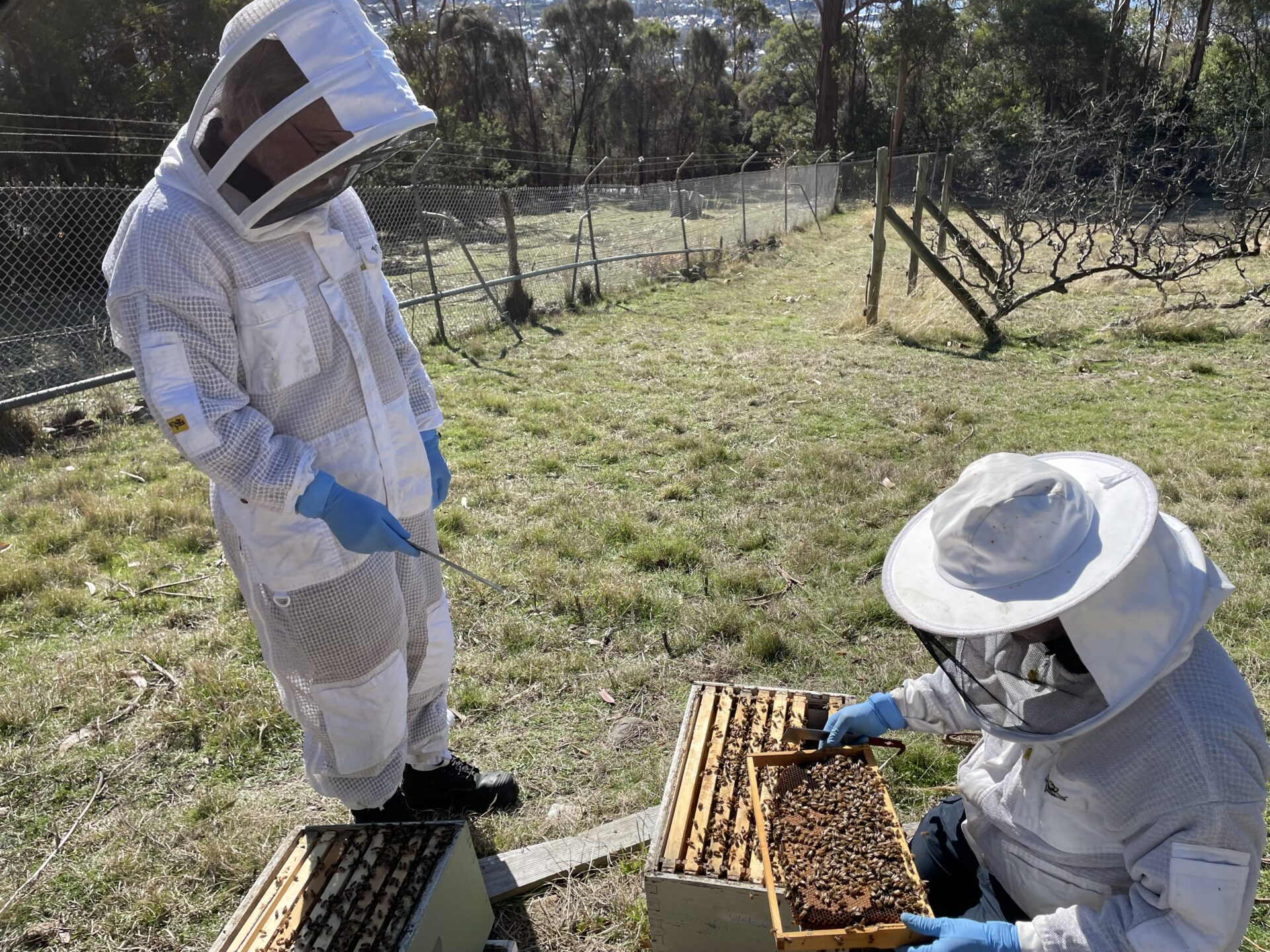
Jason Pierce from King Island and Carson McGinty (VDO) working a hive
The days were spent visiting beekeepers (in between the wind and the rain) and providing practical demonstrations on surveillance and monitoring, as well as building up their knowledge of beekeeping in general. Engagements were tailored to the experience of the individual, and Carson was assured everyone was left with a flood of information, practical methods for detection, and management tools should varroa be detected.
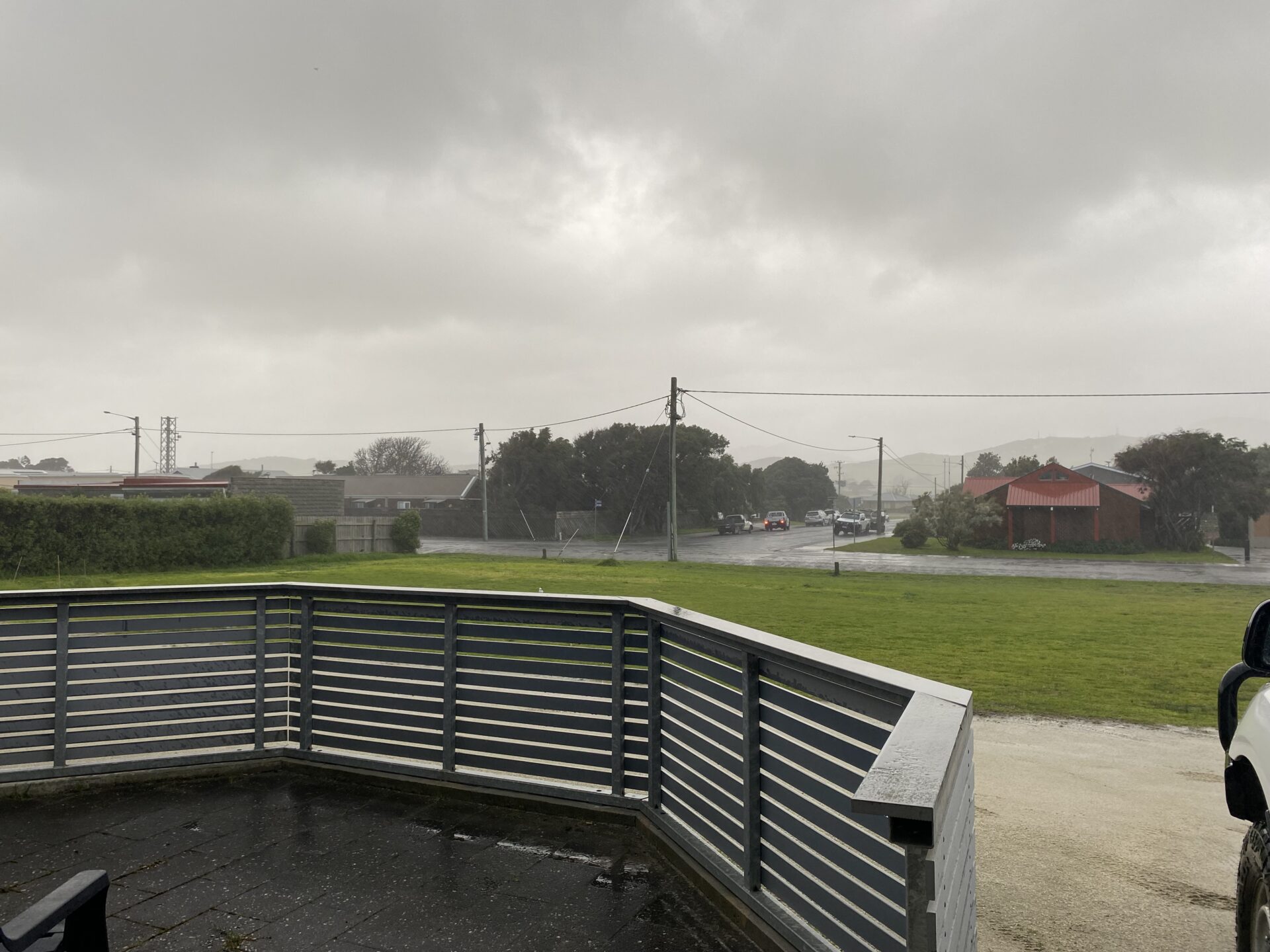
An indicator of the Tasmanian weather during the VDO visit.
The reception from each group was fantastic, and on King Island a commercial beekeeper offered to assist recreational beekeepers with developing their general skills as beekeepers in addition to their monitoring for Varroa. It was great to see a dedicated community focused approach to keeping Varroa out of the islands, as this is the real path towards keeping varroa out Tasmania as well.
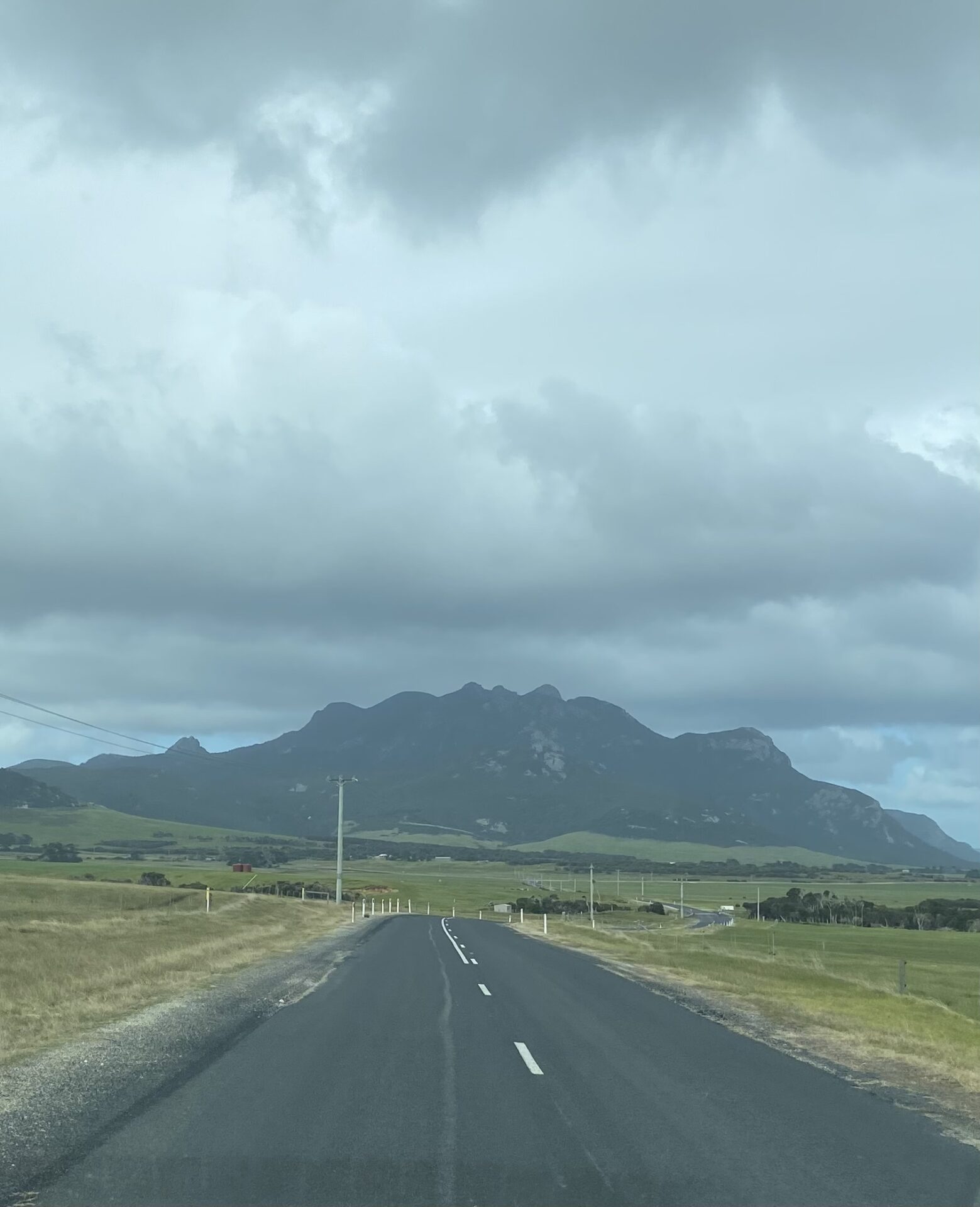
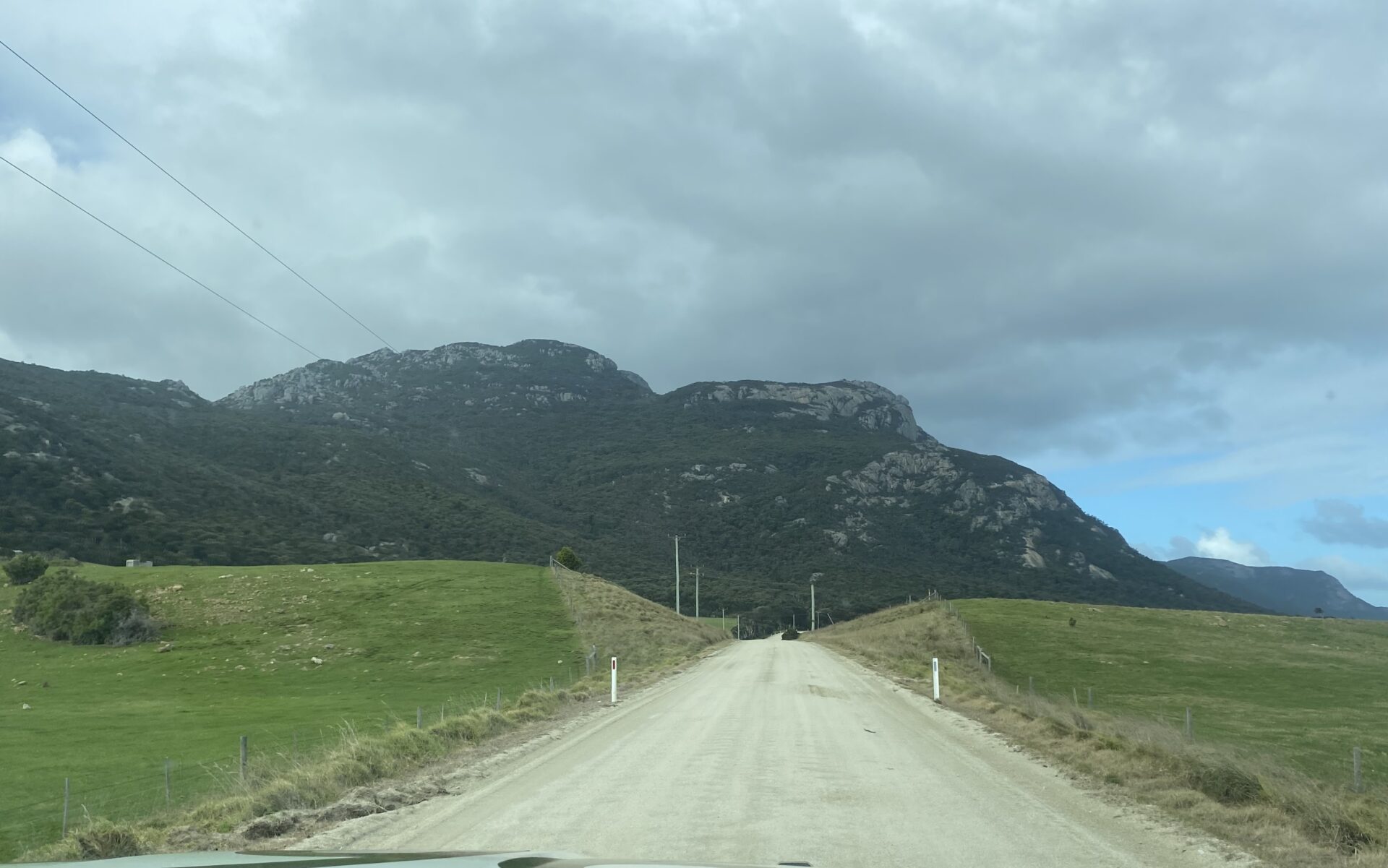
Scenery on route to engagement near Strzelecki National Park on Flinders Island.
Varroa Extension and Engagement Outcomes in Tasmania:
Learning and development of participants regarding both varroa management, and general beekeeping knowledge
Increased varroa mite surveillance and reporting across the two islands
Increased bee biosecurity across two major regions of Tasmania
Increased positive relations between the T2M Program, Tasmanian Biosecurity, and beekeepers on King Island and Flinders Island
Fostering and development of a communal and collaborative approach to keeping varroa out of the islands.
Scenery on route to engagement near Strzelecki National Park on Flinders Island.
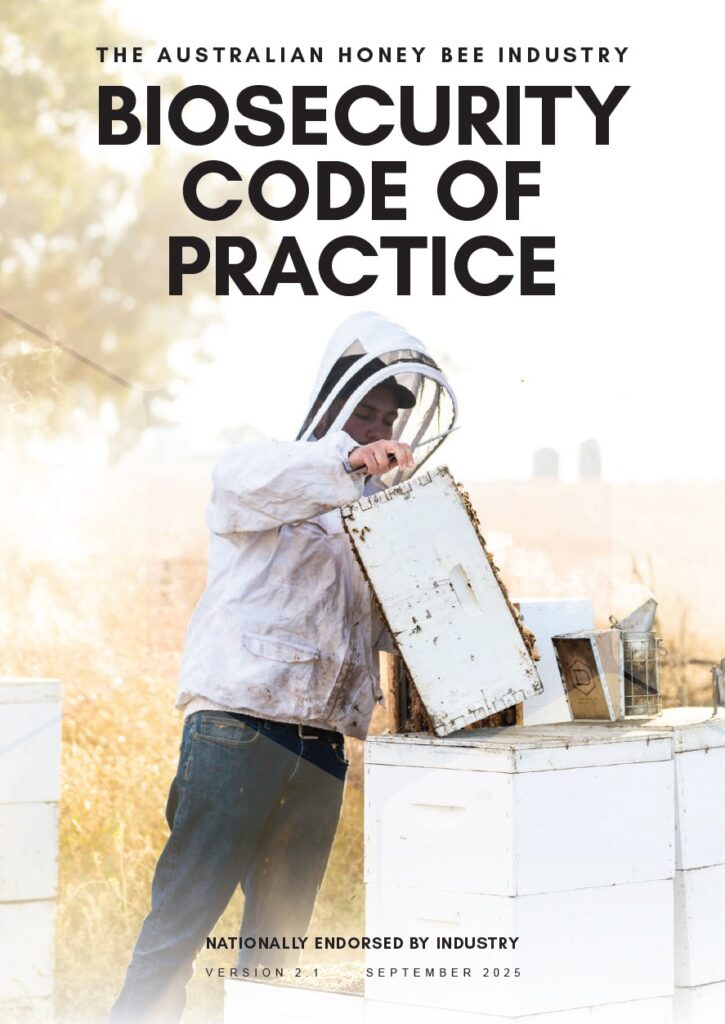
Updated Australian Honey Bee Industry Biosecurity Code of Practice
As a result of the arrival and endemic status of Varroa destructor within Australia, a project under the National Transition to Management of Varroa Mite was to address necessary changes to the Code of Practice as well as the Biosecurity Manual.
The Australian Honey Bee Industry Biosecurity Code of Practice (the Code) has been developed in consultation with beekeepers and governments to provide a clear framework for Australian beekeepers to engage in best-practice biosecurity.
In the context of beekeeping, biosecurity can be defined as a set of preventive measures designed to reduce the risk of introduction and spread of pests
or diseases in bees. The principles of good beekeeping biosecurity describe the actions a beekeeper should take to minimise the impact of pests and diseases on their bees and the bees of other beekeepers.
The objectives of the Code are to:
Increase productivity in the Australian honey bee industry by improving the general level of pest and disease control by Australian beekeepers.
Assist beekeepers in recognising exotic pests and diseases of bees and prepare for an exotic or emerging pest/ disease response.
Ensure beekeepers conduct regular surveillance for the presence of exotic and endemic pests and diseases.
Assist with the management of Varroa mite in Australia.
Assist in the management of significant endemic diseases of bees, particularly American foulbrood (AFB).
Facilitate the cross-border movement of bees through adoption of a single national code for biosecurity practices.
Ensure the future viability and sustainability of the Australian honey bee industry
Both documents are now available for all beekeepers across Australia, with access to download via the AHBIC website www.honeybee.org.au/biosecurity
AHBIC Industry Update 74 – SA Detections
Additional Varroa Confirmed
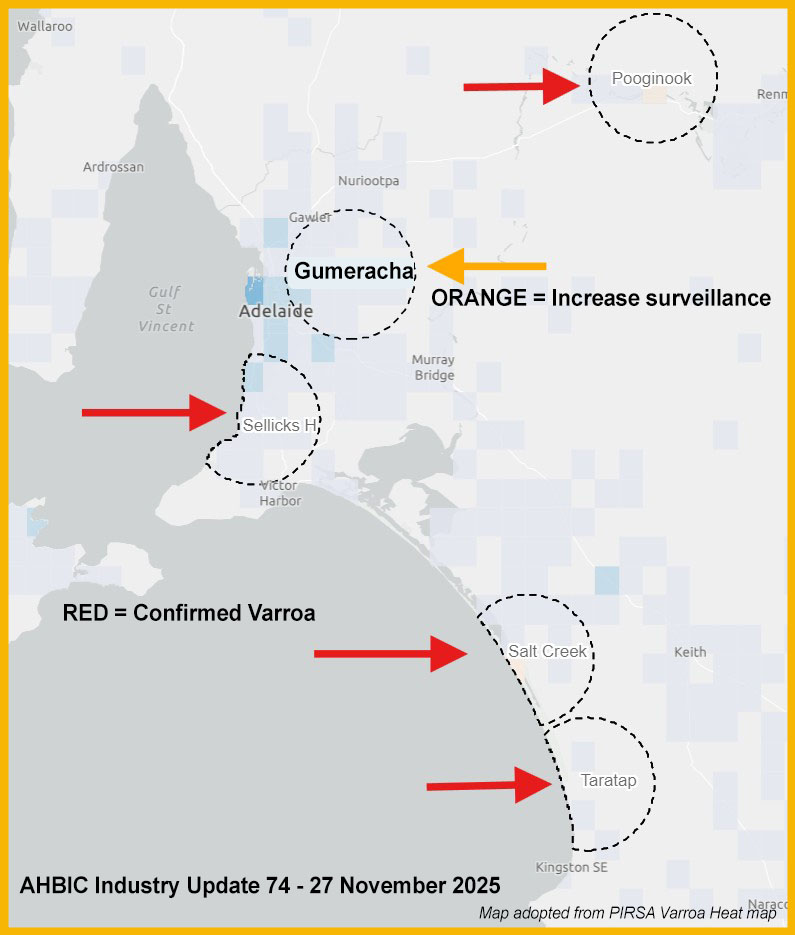
Varroa mites have been detected in hives at additional sites in the Limestone Coast and upper Fleurieu Peninsula since a detection at Salt Creek last week.
One of these new confirmed apiaries, linked to the Salt Lake apiary is located further south of the Limestone Coast at Taratap. Another new location confirmed positive is at Sellicks Hill in the upper Fleurieu Peninsula.
PIRSA have confirmed that both apiaries managed by different beekeepers are linked through both having operated on the same property at Gumeracha in the Adelaide Hills. It is important to note that varroa mite has not been detected at Gumeracha but may potentially be within the feral/unmanaged bee population in this area.
Image 1: PIRSA Detection Map 27 November 2025
Ongoing PIRSA Surveillance
PIRSA is working with all affected beekeepers to undertake tracing and where required, additional surveillance will be undertaken to establish the extent of the incursion.
To date, a source for these incursions in the Salt Creek, Taratap and Sellicks Hill areas is not known at this stage.
To allow for a thorough assessment of this latest detection, surveillance using sticky mats and acaricides are being deployed by PIRSA staff across all potentially impacted hives. The enforced euthanasia of hives will not be undertaken by PIRSA, this is in line with the Transition to Management. Support is being given to beekeepers to manage their hives impacted by varroa mite consistent with National and State transition to management plans.
South Australian Beekeepers
All South Australian beekeepers are urged to:
• Inspect their hives regularly using alcohol wash soapy water wash techniques.
• Report any suspected detections immediately to PIRSA via the Exotic Plant Pest Hotline on 1800 084 881.
• Ensure hives are registered with PIRSA so you can receive up-to-date biosecurity notices and guidance.
Any beekeepers who currently have had, hives within 25km of Salt Creek, Taratap, Sellicks Hill or Gumeracha since mid-August or intend to keep hives in these areas, are requested to shorten their varroa surveillance intervals to every 3-4 weeks.
Varroa Development Officers – how can they support you?
VDOs are available to offer free support with varroa monitoring, education and hive management information through a variety of avenues including one to one contact via phone, email or face to face, through attendance at small group and association meetings, delivery of short information sessions or larger group workshops.
This is a stressful time for beekeepers across the industry, and we remind beekeepers that there is support and help if you need it. In South Australia the following contacts for PIRSA and services are available to beekeepers.
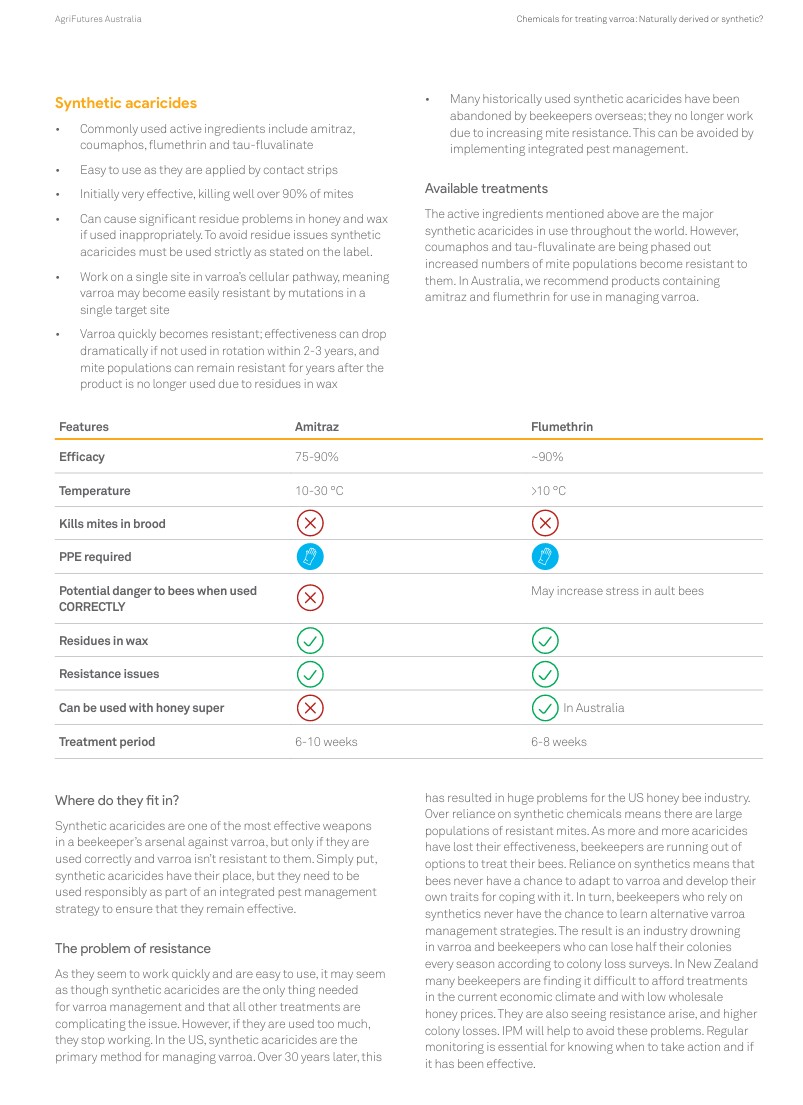
Beekeepers: All States & Territories: Check your Hives!!
AHBIC reminds beekeepers across South Australia, Western Australia, Northern Territory and Tasmania that it is more important than ever to conduct surveillance on colonies in your care. With current conditions, checking hives for presence of varroa using one of the preferred methods is essential. In those states free of varroa, if you suspect you have found mites then ring the Exotic Plant Pest Hotline 1800 084 881.
Varroa Coordinator
Bianca Giggins
0402 467 780
bianca@honeybee.org.au AHBIC, its employees, executive and consultants expressly disclaim all and any liability to any person in respect of anything, and the consequences of anything, done or omitted to be done in reliance, whether wholly, partly, upon the whole or any part of the contents of this industry update document.
AHBIC Industry Update 73 – Further SA Detection
Varroa Confirmed – Limestone Coast
Varroa mite has been detected in beehives in the Limestone Coast region near Salt Creek, South Australia.
A suspected detection of varroa mites in a hive was notified to PIRSA on Wednesday, 19 November, by a vigilant South Australian beekeeper undertaking routine surveillance. The sample was collected by PIRSA confirmed as varroa mite at the SARDI laboratory.
PIRSA and the beekeeper are working together to undertake surveillance and linked apiaries where additional surveillance will be undertaken.
To date there is no evidence that connects this detection to the previous Pooginook detection in the Riverland from September. A source for this incursion in the Salt Creek area is not known at this stage.
PIRSA Biosecurity Notice
A movement control has been applied to the affected apiary site to ensure bees, hives and associated equipment cannot be moved from the sites to allow a thorough traceback assessment, surveillance and treatment.
A Biosecurity Notice to beekeepers has been issued today, and a meeting of the South Australian Varroa Industry Advisory Committee (SAVIAC) has been held.
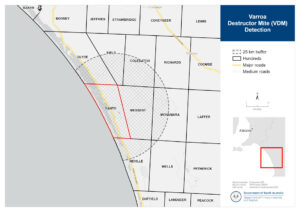
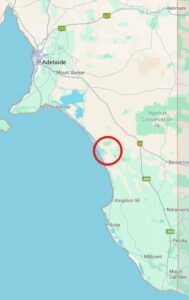
Image 1: PIRSA Detection MapImage 2: Salt Creek area in red, in relation to Adelaide
Planned PIRSA Surveillance
To allow for a thorough assessment of this latest detection, sticky mats and acaricides are being deployed across all potentially impacted hives. The enforced euthanasia of hives will not be undertaken by PIRSA. Support is being given to beekeepers to manage their hives impacted by varroa mite consistent with National and State transition to management plans.
South Australian Beekeepers
Any beekeepers who currently have, or since mid-October have had, hives within 25km of Salt Creek, or intend to keep hives in the area, are requested to contact the PIRSA Biosecurity Apiary Unit by emailing pirsa.beebiosecurity@sa.gov.au. All South Australian beekeepers are urged to:
Inspect their hives regularly using alcohol wash, sugar shake, or sticky mat techniques.
Report any suspected detections immediately to PIRSA via the Exotic Plant Pest Hotline on 1800 084 881.
Ensure hives are registered with PIRSA so you can receive up-to-date biosecurity notices and guidance.
Varroa Development Officers – how can they support you?
Since the establishment of the Transition to Management Plan, PIRSA’s VDOs have conducted 664 engagements involving 1,311 beekeepers to educate them on varroa mite. Their services are available to all beekeepers, commercial or recreational and regardless of registration status, whether they are based in metropolitan Adelaide or regional areas.
VDOs are available to offer free support with varroa monitoring, education and hive management information through a variety of avenues including one to one contact via phone, email or face to face, through attendance at small group and association meetings, delivery of short information sessions or larger group workshops.
This is a stressful time for beekeepers across the industry, and we remind beekeepers that there is support and help if you need it. In South Australia the following contacts for PIRSA and services are available to beekeepers.
Beekeepers: All States & Territories: Check your Hives!!
AHBIC reminds beekeepers across South Australia, Western Australia, Northern Territory and Tasmania that it is more important than ever to conduct surveillance on colonies in your care. With current conditions, checking hives for presence of varroa using one of the preferred methods is essential. In those states free of varroa, if you suspect you have found mites then ring the Exotic Plant Pest Hotline 1800 084 881.
National T2M Webinar Final
The National Varroa Mite Management Program team will host a Final Program Webinar, on Wednesday 3 December 2025, starting at 7pm.
This webinar will reflect on the initial response first detection of Varroa in 2022 and subsequent Transition to Management Program. An overview of the delivery of T2M program objectives and detail state and territory plans to continue to support Australia’s honey bee and pollination-dependent industries in the years ahead.
The webinar will also feature a live Q & A session. This is a free online event and registrations are essential.
Varroa Coordinator
Bianca Giggins
0402 467 780
bianca@honeybee.org.au AHBIC, its employees, executive and consultants expressly disclaim all and any liability to any person in respect of anything, and the consequences of anything, done or omitted to be done in reliance, whether wholly, partly, upon the whole or any part of the contents of this industry update document.
Friends of AHBIC
If you aren’t already a Friend of AHBIC, we welcome you to join our group of organisations and individuals who are supporting Australia’s national beekeeping industry that supports you.