Honey Bee
← Back

Newsletter Edition - May 2026

  • CEO Update May 2026

    CEO Report May 2026

    Over the last month AHBIC has been consumed by the miticide resistance issue and the impacts that are being felt on the ground. We have been actively talking to the government and pollination dependent industries to raise awareness and find support for our industry. We have met with Research and Development Corporation (RDC’s) to ensure all the research is being directed into the right areas and have been working with our member bodies to find support options for industry.

    We are in the middle of conference season with the AHBIC team recently attending the NSWAA conference in Bathurst. The 300 delegates heard from many excellent speakers with a clear focus on understanding resistant mites and the challenges that our beekeepers will be facing. Other presenters talked to the details of the new mite population, how we can test for resistance and how viruses interact with varroa.

    Plant Health Australia AGM

    Last week I attended the mid-year series of plant health meetings in Adelaide.  A weeklong series of meetings that cover all things plant biosecurity and The Deed. It was a great opportunity to network with the other 57 signatories to The Deed including pollination dependent industries and jurisdictional biosecurity leaders.

    Every 5 years The Deed is reviewed to incorporate lessons learned from incursions and work through any required amendments to The Deed agreement to ensure it delivers effective responses. The initial consultation phase of The Deed review is complete along with a deed signatory workshop. Whilst it is not expected that there will be significant changes we are pleased that there will be improvements.

    Imported Honey

    In this newsletter we have included an article about the recent national honey authenticity survey and what it means for the industry. This is positive for beekeepers, with DAFF recognising the seriousness of the issue and showing a commitment to finding solutions for industry.

    Honey Bee Industry Champions

    AHBIC was successful in receiving a capacity building grant from AgriFutures Australia recently. The grant has enabled eight up-and-coming beekeepers and researchers to receive up to $1,000 grant each to assist with the cost of attending a state conference. We received several quality responses and chose 8 successful candidates. Applicants were able to nominate the conference they wanted to attend, and we had 4 recipients attend the NSW conference in Bathurst. The remaining successful candidates will attend their chosen conference in the coming weeks. AHBIC believes this is a great small project to encourage new beekeepers and researchers to take steps to further themselves and their careers within our industry.

    Changes to the BOLT course platform

    Plant Health Australia (PHA) have been working toward launching a new platform for the Biosecurity Online Training (BOLT) for beekeepers course. PHA have noted the previous website management business became insolvent, forcing PHA to negotiate a new contract to continue the BOLT course access for industry. The new web platform, transitioning between now and 30 June 2026, will result in a new look course page but the online content will remain the same. We are looking forward to a step by step process being provided by PHA in the coming days to share with beekeepers in preparation to the transition from old to new. If you are due to re-do the BOLT course between now and 30 June, and have any questions about the website, course or certificates, we recommend you reach out to us via Bianca@honeybee.org.au or to your state Bee Biosecurity Officer who will soon have details to support you through the change.

    The Month Ahead

    There a number of conferences in June including Hort Connections in Adelaide, the Victorian Apiarists Association conference in Melbourne, the Queensland Beekeepers Association in Bundaberg, followed by the South Australian Apiarists Association conference in Morphettville. An AHBIC team member or Executive Director will be present at all, and we look forward to talking with beekeepers and learning from the presentations.

    In addition to the conferences, I will be working on a submission for the National Biosecurity Reform consultation, participating in the ACCC Ag Committee Working Group, in addition to our continued lobbying to government around varroa impacts.

    There are many beekeepers doing it tough at the moment, always remember to be kind to one another and look out for your mates and colleagues as we navigate these challenging times together.

    Danny LeFeurve

    CEO

  • Federal Agriculture Department’s Imported Honey Authenticity Survey Results

    The current threats to the Australian beekeeping industry mean that it has never been more important to protect and promote our industry to ensure our long-term economic viability. Back in 2022, AHBIC launched our “Honey Fighting Fund” to begin a multi-pronged approach which included gathering authenticity data in order to protect Australia’s beekeeping industry and using the de-identified info in building a solid, data driven de-identified platform to advocate on behalf of industry to our government for policy reform.

    DAFF Honey Survey Details

    As a result of AHBIC’s pressure and relationship building with our federal counterparts we can now share work that has been undertaken. The Australian Federal Department of Agriculture, Fisheries and Forestry (DAFF) conducted a pilot survey to assess the authenticity of imported honey samples and compare the department’s current border tests with the performance of selected commercially available analytical tests.

    The survey was undertaken with food regulatory agencies in New South Wales, Queensland, South Australia, Victoria and Western Australia, which assisted with sample collection activities. Sampling was conducted between October and November 2025, with samples collected from importers and retail sources representing 95% of the imported honey (excluding NZ).

    Laboratory analysis was conducted by the National Measurement Institute.

    Testing included both:

    • the existing Imported Food Inspection Scheme honey testing panel (current federal mandated tests for imported honey) which includes C4 carbon isotope test, moisture content and reducing sugars, and
    • a Nuclear Magnetic Resonance (NMR)-based honey profiling method (which generates a chemical fingerprint of honey samples, compares samples with an international reference database and identifies atypical profiles).


    AHBIC advocated for additional test assays to be included but were unable to secure the support from DAFF, however additional samples were taken to allow for further analysis.

    What was the testing looking at:

    Australia’s current government importation testing protocols utilise the C4 carbon isotope honey test, which we have demonstrated through AHBIC’s Honey Fighting Fund initial testing, to be insufficient in detecting basic global fraudulent methods. The DAFF pilot survey was designed to help substantiate AHBIC claims through comparing the panel test results with the NMR profiling.

    Survey Results

    All samples passed the government mandated panel of tests.  However, a number of samples were identified through NMR as suspected to have foreign sugars present. These results align with the previous AHBIC tests results and has highlighted the problem to government through this independent testing.

    Potential Industry Outcomes

    The DAFF survey has demonstrated the potential weakness of the existing testing assays. DAFF have committed to working with AHBIC to evaluate alternative or additional testing to strengthen our boarder protection.

    Results have been shared with the participating state food regulators and coordinated engagement with participating businesses is underway to communicate results with importers.

    DAFF is now considering how best to implement the findings of the survey. AHBIC will continue to put pressure on the department for change, but it is a slow process. DAFF will continue working collaboratively with industry, state and territory regulators, technical experts and international counterparts to further evaluate available analytical methods that may strengthen Australia’s approach to detecting imports of adulterated honey.

  • Australian Colony Loss Survey

    The Australian Colony Loss Survey provides valuable hive management and hive health data for the beekeeping industry.

    This survey provides critical data to support and guide the Australian beekeeping industry as it navigates an increasingly complex set of challenges. Covering key issues such as Varroa mite management, queen health and failure, seasonal pressures, and broader biosecurity risks, the survey offers a comprehensive snapshot of current industry conditions.

    Importantly, more beekeeper participation in the Australian Colony Loss Survey is the key to making the survey as valuable as possible to all stakeholders.

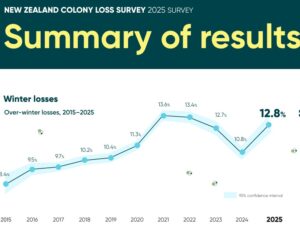
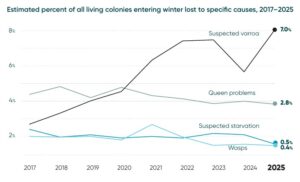
    Take a look at the 2025 New Zealand Coloss Result snapshots below. The NZ Coloss survey has been operational since 2015, this has given a voice to the NZ beekeepers with longitudinal data to support their industry.


    Image 1; NZ Winter Losses, sourced from: https://www.landcareresearch.co.nz/discover-our-research/environment/sustainable-society-and-policy/nz-colony-loss-survey/2025-colony-loss-survey
    Image 2; NZ winter loss causes, sourced from: https://www.landcareresearch.co.nz/discover-our-research/environment/sustainable-society-and-policy/nz-colony-loss-survey/2025-colony-loss-survey

    The image 2, above shows data between 2015 through to 2025 of causes of winter losses.

    Clearly identifying the gradual impact of varroa on winter colony losses in NZ over time but it is also identifying a steady continuation of losses attributed to queen problems, starvation and wasps. This longitudinal data is like a time-lapse of beekeeping in NZ—by taking part in surveys over time, you can help build a clearer picture of how experiences, choices, and trends really change, not just how they look in a single moment.

    AHBIC recently hosted a short industry survey which was useful in capturing a snapshot in time of beekeepers who have considered exiting industry, we are utilising that data to advocate to government for actionable change in the coming weeks. Although the survey results are important, they are being used in the short term to give us clear industry situational awareness and data to share with government.

    AHBIC is still urging Australian beekeepers to commit to the Australian Colony Loss Survey in 2026 to make sure all the important industry matters are captured and recorded now and into the future.

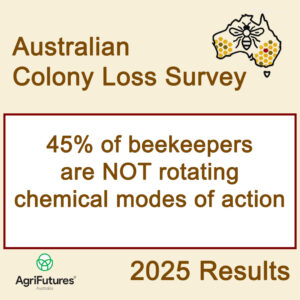
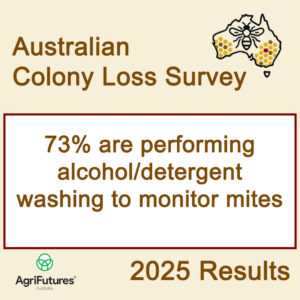
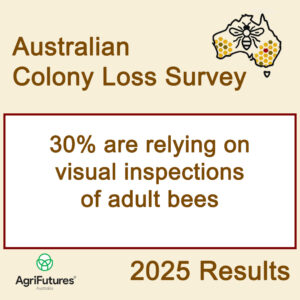
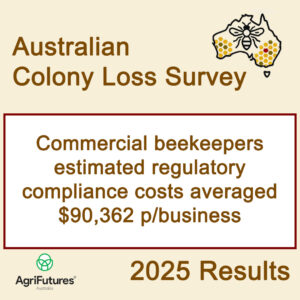
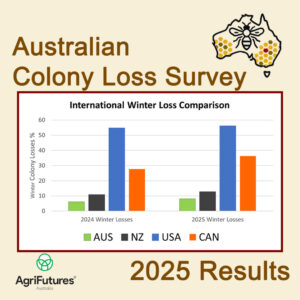
    Some important findings from 2025 Australian Colony Loss Survey:

    AHBIC will be playing a key role in taking the Australian Colony Loss Survey forward in 2026. We are looking forward to implementing a steering committee and taking feedback to address industry concerns, new ideas or questions to be added and any changes industry stakeholders may have moving forward. Please reach out to bianca@honeybee.org.au for questions you may have.

    Stay up to date! Register to be informed about 2026 Australian Colony Loss Survey:


    Check out the Australian Colony Loss Website: https://colonyloss.au/


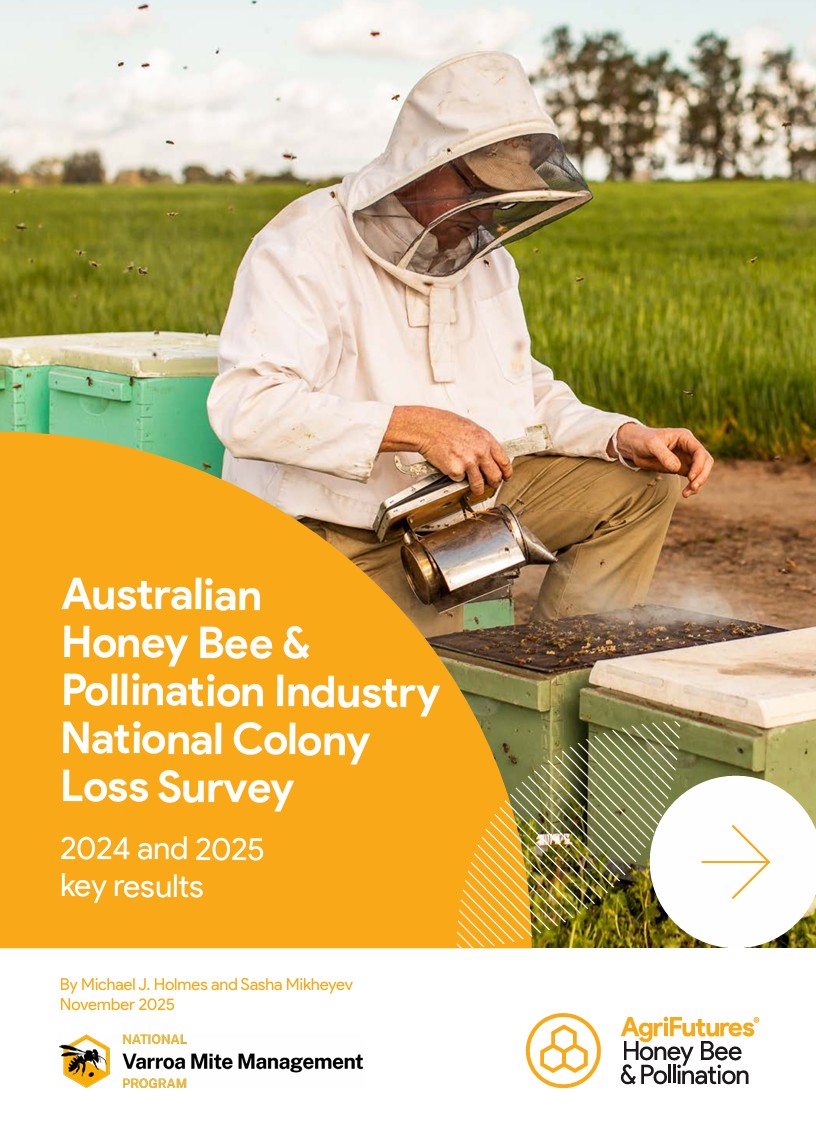
    Australian Colony Loss Report 2025 Click Here

    The 2025 annual survey supported by funding through The National Varroa Mite Management Program, delivered by AHBIC and managed by AgriFutures Australia was conducted to collect national data and monitor changes in colony loss over time.

    The 2025 report highlights the ongoing efforts of beekeepers across Australia to maintain colony health and sustain pollination services. The Australian Colony Loss Survey 2025 aims to strengthen industry resilience by providing evidence-based insights, supporting informed decision-making, and contributing to a sustainable future for Australian apiculture.


  • Miticide Registrations, APVMA and the Role of AHBIC

    There has been commentary across industry about the APVMA process for varroa miticides and what role AHBIC plays. It is important to separate three things: emergency permits, full product registrations, and AHBIC’s advocacy role.

    Emergency permits 

    Emergency permits are temporary approvals used to legalise the use of an agvet chemical product, or active constituent, to address an emergency situation. The APVMA states that the final decision on whether a use qualifies as an emergency use rests with the APVMA, but they often not approve multiple permits for the same active ingredient or where alternatives exist. 

    Anyone can apply for an emergency permit, but applications are usually led by a state jurisdiction or sometimes industry bodies. In the varroa response, many treatment permits have been held by NSW DPIRD because of its role as the lead agency. AHBIC also holds permits where appropriate, such as for copper naphthenate but does not hold any varroa treatment permits. 

    Emergency permits are assessed against APVMA criteria and are generally conservative. The APVMA must be satisfied there is adequate information to manage risks to users, bees, the environment and trade. Where there is inadequate scientific data provided the permit will reflect limitations on use. 

    AHBIC has strongly advocated for access to emergency treatment options, but AHBIC does not determine or has input into permit labels, withholding periods, treatment limits or other conditions. Those decisions sit with the APVMA. 

    Full product registration 

    Full registration is a separate and more detailed process. Before an agvet chemical product can be legally supplied, sold or used in Australia, it must be registered by the APVMA.  

    For a product registration, the manufacturer or its Australian representative submits the application with a proposed label and supporting scientific data. The APVMA must be satisfied that the product meets safety, efficacy, trade and labelling criteria.  

    This means label claims must be backed by evidence. For example, if a manufacturer wants a label to allow multiple treatments in a season, the data must support safety, efficacy, residues and resistance management. If the evidence is limited, the label will be conservative. 

    AHBIC has no role in assessing or providing input into full registrations. That process is confidential and between the applicant and the APVMA. Once a product is registered, any label change or variations must also be submitted by the manufacturer (not AHBIC) with supporting data. Lobbying AHBIC or the APVMA will not, by itself, change a registered label it is the manufacturer that must be convinced to propose changes. 

    The issue of influence and industry capture 

    The APVMA has also been the subject of significant scrutiny. A key review published in July 2023 by Clayton Utz commissioned by the government addressed serious allegations raised through Senate Estimates about industry influence. Whilst the report found there had been no evidence of inappropriately registered products it did identify a perception risk. It noted the regulator’s strong focus on approval timeframes and its level of engagement with industry stakeholders. 

    Importantly the report highlighted the structural reality of the system, in that, while industry, including AHBIC, can advocate for access to tools and highlight operational impacts, it cannot influence regulatory outcomes, data assessments or label settings.  

    Product registrations, label claims and use patterns are determined solely through APVMA’s statutory, evidence-based assessment process, and any changes require formal applications supported by data from the product registrant.  

    In practical terms, this means AHBIC cannot “get a label changed” or alter use conditions through advocacy—its role is limited to facilitating industry need, encouraging investment, and supporting the generation of the evidence required for regulatory consideration. 

    For AHBIC, this is an important distinction. Industry should advocate for access to safe and effective tools, but it should not seek to influence scientific regulatory decisions. AHBIC’s role is to identify industry need, communicate practical impacts, encourage manufacturers to enter the Australian market, and support R&D that builds the evidence base required for registrations. 

    What AHBIC does 

    AHBIC’s role is advocacy, coordination and intelligence gathering. This includes: 

    • Encouraging manufacturers to register products in Australia. 
    • Over the last 4 years AHBIC has met with every manufacturer that has registered varroa treatments globally.  Many of the current options available to beekeepers is a direct result of our advocacy. 
    • Advocating for emergency access where identified gaps exist. 
    • AHBIC has lobbied NSW DPIRD and APVMA to allow multiple emergency permits which normally doesn’t occur. We have searched globally and identified options that are registered elsewhere and advocated for those to be available for Australian beekeepers. As an example the whole AHBIC executive has met with directors of the APVMA in 2024 to discuss a range of issues (see AHBIC – APVMA communique) including access to ‘own use’ permits and greater access to oxalic acid. 
    • Working with R&D providers on new treatment options. 
    • Working with AgriFutures, Hort Innovations and universities to identify emerging control options and what work needs to be done in Australia to bring them to market. Some of these currently being developed include fungal control, RNAi control, screening of other agricultural miticides to find new effective varroa controls and the development of new actives/modes of action. 
    • Monitoring global miticide developments and resistance issues.  
    • Communicating practical information to beekeepers. 
    • Working with suppliers to assist with bottle necks or regulatory barriers to supply. 

    This aligns with AHBIC’s strategic role as the national voice for the honey bee and pollination industries, particularly in biosecurity, market integrity and industry resilience. 

    Final message 

    The miticide registration system is evidence-based, confidential and regulator-led. AHBIC can advocate for access and help build the case for industry need, but it cannot write labels, approve products or override APVMA decisions. 

    That independence matters. The industry needs timely access to effective varroa treatments, but it also needs confidence that products are safe for bees, beekeepers, consumers, trade and the environment. 

    Article written by: Danny LeFeuvre, CEO Australian Honey Bee Industry Council, 2026

  • Friends of AHBIC

    If you aren’t already a Friend of AHBIC, we welcome you to join our group of organisations and individuals who are supporting Australia’s national beekeeping industry that supports you.

    BECOME A FRIEND

    OUR CURRENT FRIENDS

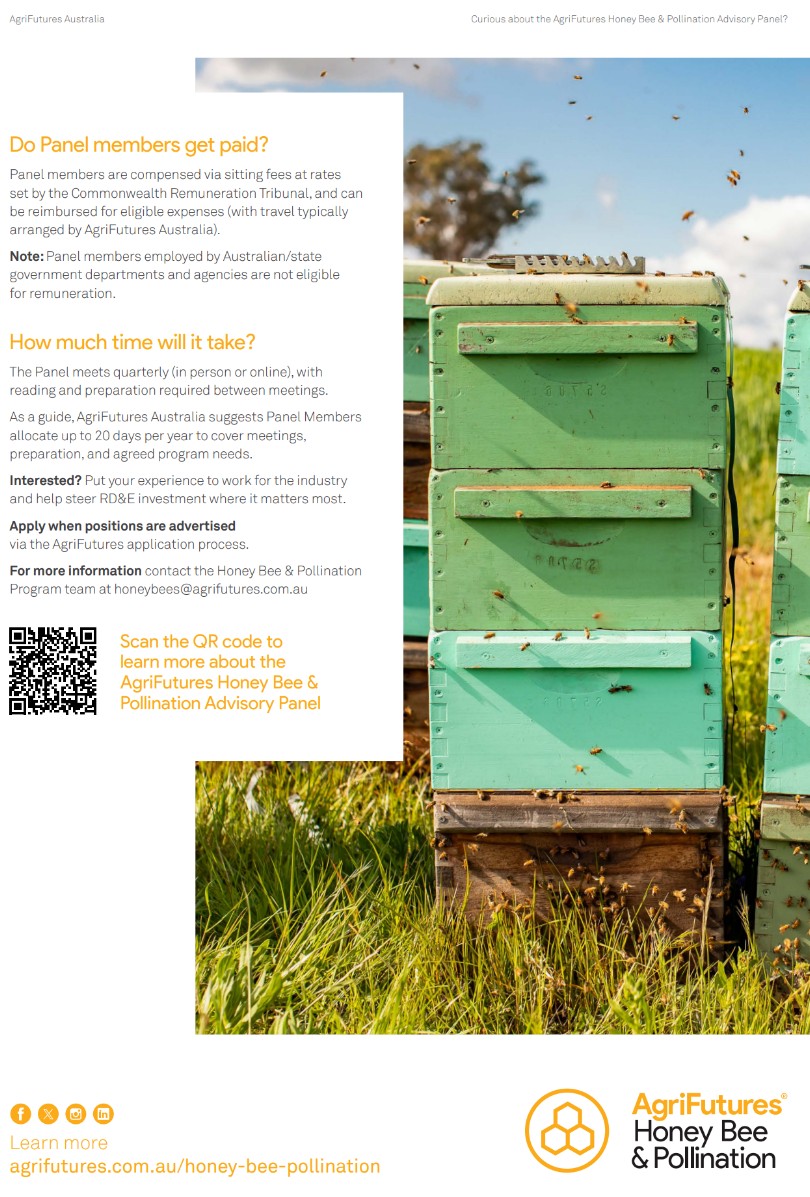
  • AgriFutures Honeybee & Pollination Panel; Commercial Honey Producers and Researchers Wanted

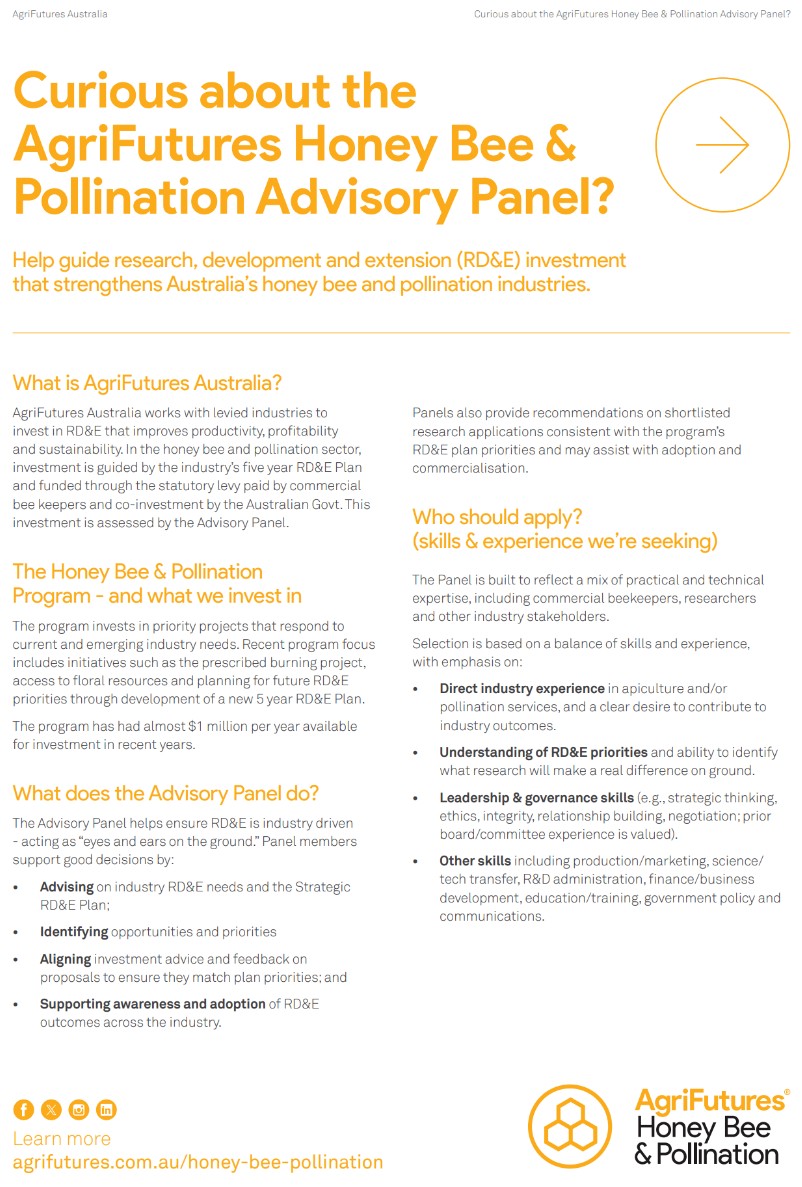
    Applications now open for AgriFutures Honey Bee & Pollination Program Advisory Panel

    The AgriFutures Honey Bee & Pollination Program is seeking to appoint four new members to the Honey Bee & Pollination Advisory Panel.

    These positions are open to commercial honey producers, commercial pollinators and researchers working in honey bee or related fields, who are not currently engaged in AgriFutures Honey Bee & Pollination Program-funded research.

    Applicants should demonstrate:

    • industry experience and a desire to contribute to the industry
    • understanding of industry research priorities
    • strategic leadership and governance capability
    • ability to contribute effectively to the Advisory Panel.

    Applicants with experience in research and development management, extension or training are also encouraged to apply. Governance and financial management experience will be highly regarded.

    About the AgriFutures Honey Bee and Pollination Program

    The AgriFutures Honey Bee and Pollination Program invests in research that ensures a productive, sustainable and profitable beekeeping industry and secures the pollination of Australia’s horticultural and agricultural crops. The Program focuses on supporting the longevity of the honey bee and pollination industry in Australia with four priority areas:

    • Improve hive productivity with innovative pest and disease control, feeding, breeding, and automation solutions
    • Improve pollination, floral resource access and industry sustainability
    • Enhance industry capability
    • Deliver quality Australian honey with well characterised attributes and traceability.
    About the Advisory Panel

    The Advisory Panel brings together a diverse mix of leading commercial beekeepers, pollination service providers, researchers and industry advisors, offering deep expertise across honey bee genetics, health, nutrition, pollination, commercial production and applied research to support informed decision‑making for the program.

    The Advisory Panel provides recommendations on the allocation of RD&E funding for the AgriFutures Honey Bee and Pollination Program.

    AgriFutures Australia aims to maintain geographical, age and gender diversity to ensure that the Advisory Panel appropriately represents the Honey Bee and Pollination industry.

    Advisory Panel member roles & responsibilities

    The core functions of AgriFutures Industry Advisory Panels are to ensure that RD&E investment remains industry-demand driven, including:

    • Advising – providing advice on the industry requirements for investment through the development and monitoring of Strategic RD&E Plans
    • Identifying – providing recommendations to AgriFutures on suitable RD&E opportunities and activities to address industry issues
    • Aligning – providing feedback and investment advice on RD&E proposals submitted to AgriFutures to ensure investment is aligned to priorities in the respective Program’s Strategic RD&E Plan
    • Awareness –advising and assisting in the dissemination, adoption and commercialisation of RD&E activities.

    Activities of the Program are funded by industry levy and Commonwealth funds, and any funds contributed from third parties. Advisory Panel members are recompensed for their services to AgriFutures Australia at rates determined by the Commonwealth’s Remuneration Tribunal.

    Panel members may be required for up to 25 days per year and some travel is necessary.

    Selection criteria:

    • Industry experience and desire to contribute to the industry
    • Understanding of industry research priorities
    • Strategic leadership and governance skills
    • Ability to contribute to AgriFutures Honey Bee and Pollination Advisory Panel


    Prospective applicants should carefully consider the time commitment required to effectively contribute as an Advisory Panel member prior to submitting an application.

    This is a valuable opportunity for the next generation of industry leaders to play an active role in shaping the future of the Australian honey bee and pollination sector.

    To support continuity of knowledge and ensure a diversity of skills and perspectives, appointments will be staggered between August 2026 and November 2026. Successful applicants may also be invited to attend an Advisory Panel meeting as an observer prior to their official commencement.

    For more information please refer to the Honey Bee & Pollination Program Advisory Panel Selection Criteria.

    How to Apply:

    Applicants must complete the application form and skills matrix, and attach a CV (maximum three pages) via the online application system. As part of the application, applicants will need to outline their relevant experience in the Australian agricultural sector and their expected contribution to the Advisory Panel. Applicants should consider the time commitment required to contribute effectively before applying.

    Applications close 12pm (AEST) on Monday 20 July 2026.

    To support continuity of knowledge and diversity of skills and perspectives, appointments will be staggered between August 2026 and November 2026.

    Apply for the AgriFutures Honey Bee & Pollination Advisory Panel

    For any questions regarding the AgriFutures Honey Bee & Pollination Advisory Panel recruitment please contact:

    Luke Evans
    Program Manager, Levied Industries
    luke.evans@agrifutures.com.au


  • B-Qual Australia

    B-QUAL Australia Pty Limited has been established by the Australian Honey Bee Industry Council (AHBIC) as an independently developed and audited food safety program.

    B-Qual Mission:

    To accredit and adopt a QA (quality assurance) program for more than 90% production from the Australian honeybee industry. The project develops Certification and trains industry participants in QA standards and biosecurity; as well as providing ongoing third-party audit system.

    We encourage our readers to take a look at the BQual website

    B-Qual MAY Newsletter

    The B-Qual Newsletter articles from May 2026, with topic’s:

    • Splitting hives

    • Impacts of pesticides on Australian bee populations

  • B-QUAL

    B-QUAL is an Industry Owned Quality Assurance System for Australian beekeepers.

    How does B-QUAL certification benefit my business?

    • Product integrity
    • Quality Assurance
    • HACCP based certification
    • Regulatory compliance
    • Industry best practice
    • Biosecurity
    • Access to domestic and export markets

    B-QUAL Certification also enables an enterprise to market its product under the B-QUAL logo to show that it meets the B-QUAL Industry Standards.

    Complete your training at home at your own pace.

    For more information and to obtain a Certification Information Pack, contact the B-QUAL Certification team.

    www.bqual.com.au
    B-QUAL Pty Ltd
    Phone 07 49949820
    Email: admin@bqual.com.au