2026 AHBIC Annual Chair Report



Over the last couple of months, AHBIC has been attending the state conferences, culminating in Tasmania followed by the AHBIC AGM. All state conferences have been well attended this year, demonstrating the continued thirst for knowledge as we navigate the challenges of managing varroa. Most conferences have had a strong mix of domestic and international speakers and extensive trade displays.
As we move through winter and beekeepers begin to open hives in preparation for spring and pollination events, we are receiving mixed reports on hive strength and numbers. Varroa and the impacts of the resistant varroa population continue to significantly influence hive numbers, with many beekeepers reporting large colony losses. Unfortunately, current jurisdictional data systems are not timely enough to capture these colony losses in real-time, making the Colony Loss Survey even more important this year. The survey is due to open in September/October, and it is more important than ever to participate because this data influences government decisions.
The current varroa situation facing our industry does not fit within any pre-existing government framework that allows governments to easily activate industry support. We are no longer in the biosecurity emergency response framework, as we have transitioned to management, and varroa is not considered a natural disaster. As a result, we are seeing governments struggle to find a ways to support industry. To complicate the situation, beekeepers are mobilising, sending letters to ministers, speaking in the media and making representations to local MPs, all of which is raising the profile and importance of the challenge. However, inconsistencies in messaging and in what we are asking of government have slowed their response.
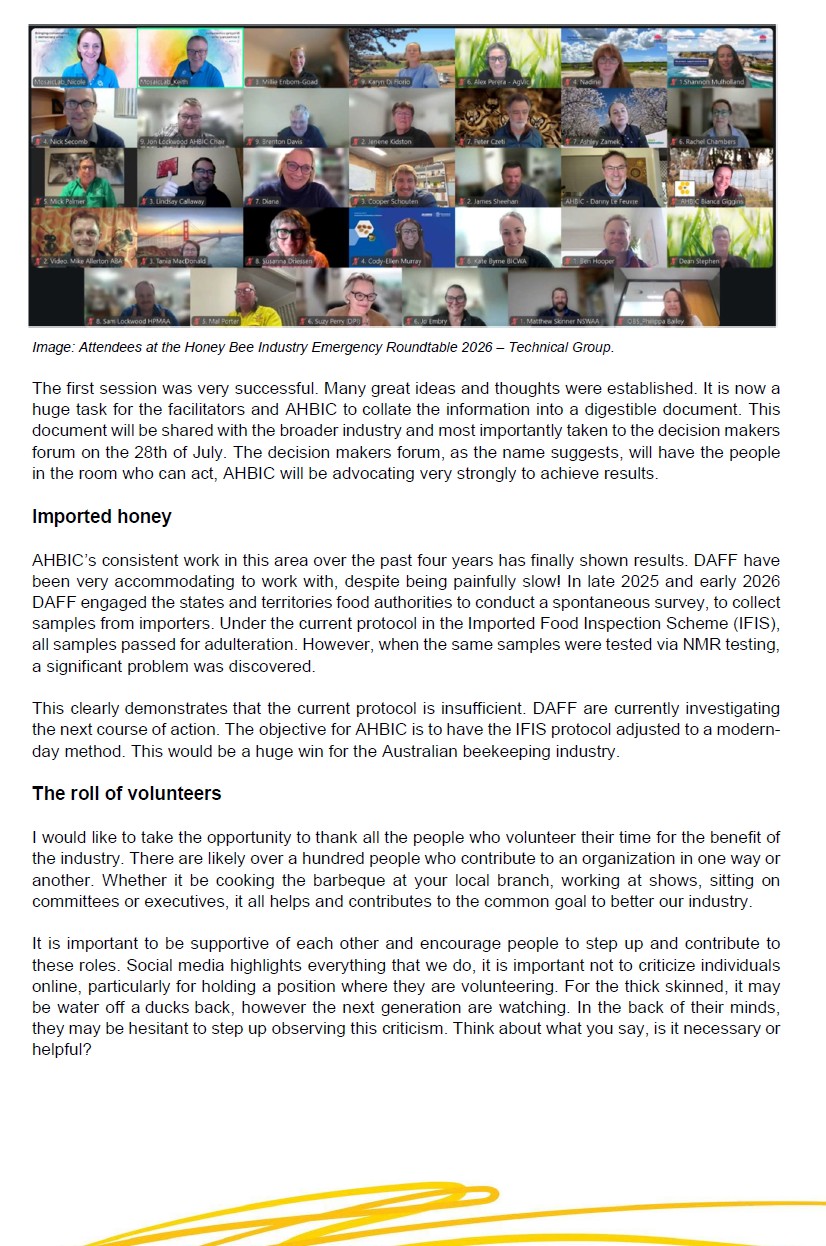
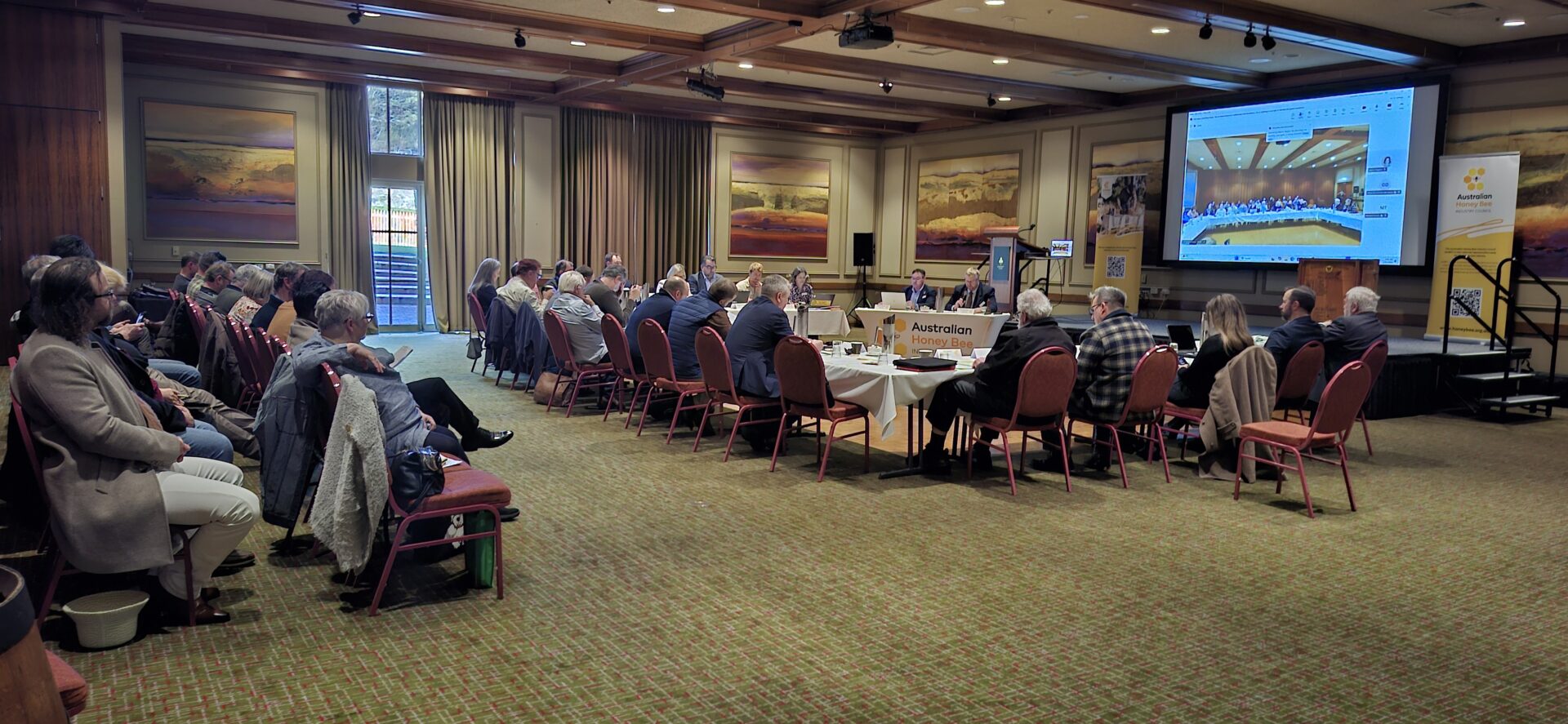
To provide greater clarity to governments, AHBIC, in collaboration with the Queensland Beekeepers Association and the Queensland Government, has held a Honey Bee Industry Emergency Roundtable. The aim of the roundtable is not to hold a talkfest, but to run an action-oriented process that first agrees on a set of prioritised, deliverable actions and then present those actions to governments seeking agreement.
The first of the two meetings, the technical workshop held on 30 June, brought together 40 representatives from industry, governments, RDCs and pollination-dependent sectors, with half of the participants being beekeepers. Fifty-five actions gathered from industry across 10 themes were considered by the workshop. Participants worked through each action, ensuring it was deliverable, impactful and feasible under government policies and regulations. They then prioritised the themes and actions.
These 55 actions were then distilled into 11 actions based on the technical workshop prioritisation and feedback. The 11 actions have been presented to all levels of government, seeking agreement at a Decision Makers Forum on 28 July. This forum includes representatives from each jurisdiction at the most senior levels, ensuring decisions can be made.
While unconventional, this approach provides a clear set of agreed actions, strengthens the case for support and will identify any barriers to agreement. The post-forum, industry-facing paper will provide beekeepers with a clear lobbying document they can be used to ensure consistency in messaging.
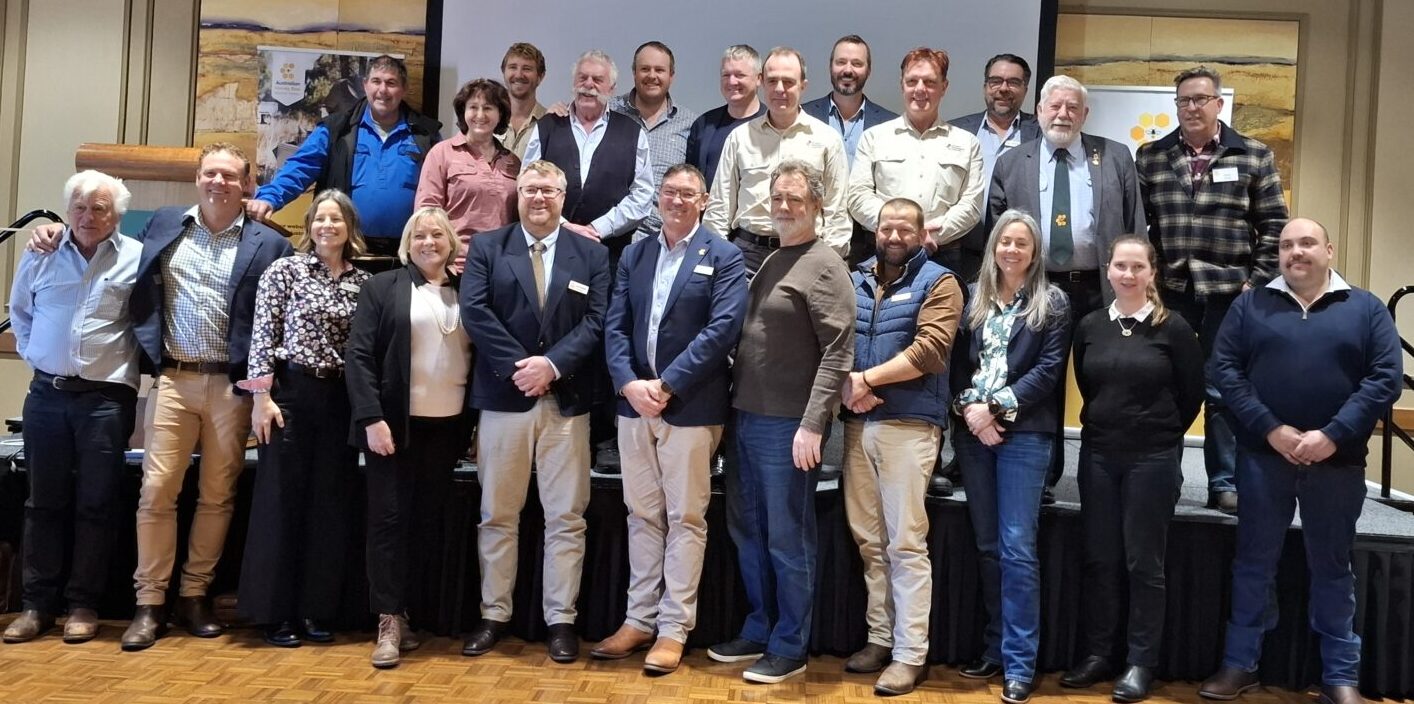
On Sunday, 12 July, AHBIC held its AGM at the Launceston Country Club. The AGM attracted 25 observers and 20 representatives from around the country. In addition to the standard procedural content, delegates heard from Dr John Roberts from CSIRO about Deformed Wing Virus (DWV) and the ability of drone semen and imported honey to carry viable DWV. Delegates passed a series of motions for AHBIC to lobby the federal government to ensure the risks are appropriately managed.
Participants also heard from ICS Consulting, who recently completed a traceability feasibility project for the federal government through AgriFutures. This project highlighted the possibility of a national hive traceability program that could track hives for biosecurity and honey traceability purposes. Delegates gained insights into the proposed structure and design of the potential system. They also heard about the strong government interest in the system, while gaining a clear understanding of the many barriers that would need to be overcome.
Chair and executive elections were held with Jon Lockwood being re-appointed for a two-year term along with Dr. Cooper Schouten also being re-appointed for a second two-year term. We welcomed Mick Palmer from Tasmania who was voted in to replace the retiring Dr. Ben McKee who has served his maximum 3 continuous terms.
I would like to acknowledge Dr. Ben McKee’s tenure on AHBIC. Not only has Ben served three terms as a director he has also served as Chair of AHBIC’s Food Safety Committee and as a delegate for the Honey Packers and Marketers Association for many years. Ben has always been a steady and reliable director of AHBIC and has provided sound advice, strong leadership and sensible decision-making across what has been the most challenging period for the industry and AHBIC, thank you Ben.
AHBIC, in collaboration with the NSW Apiarists’ Association and representatives from Amateur Beekeepers Australia, held a meeting with APVMA executives to discuss issues facing the industry and gain a deeper understanding of APVMA’s processes. The meeting covered the current challenges with label and permit inconsistencies and limitations, own-use permits, and the costs involved in treating for varroa. We also discussed providing beekeepers with additional treatment options and how we can attract international manufacturers to the Australian market.
A more detailed meeting summary will be published in the next NSWAA magazine.
The Month Ahead
Over the next month, AHBIC will be busy producing the industry-facing summary of the roundtable and following up on any actions agreed to in principle at the forum. We will also hold an AHBIC Executive meeting, a Producer Contingency Fund meeting and Australian Colony Loss Survey Steering Committee meetings.
We continue to press government on imported honey and, once the DWV-in-honey report is published, we will use it to seek additional biosecurity conditions on imported honey. A great deal of work on levy reform has also been happening behind the scenes, with the industry-facing campaign getting closer to launch.
A number of motions from the AHBIC AGM will require immediate action, and we will work on these over the coming month.
For those participating in upcoming pollination events, I hope you travel safely, your bees are in the condition you expect, and we all have a productive start to the 2026-27 honey season.
Danny LeFeurve
CEO
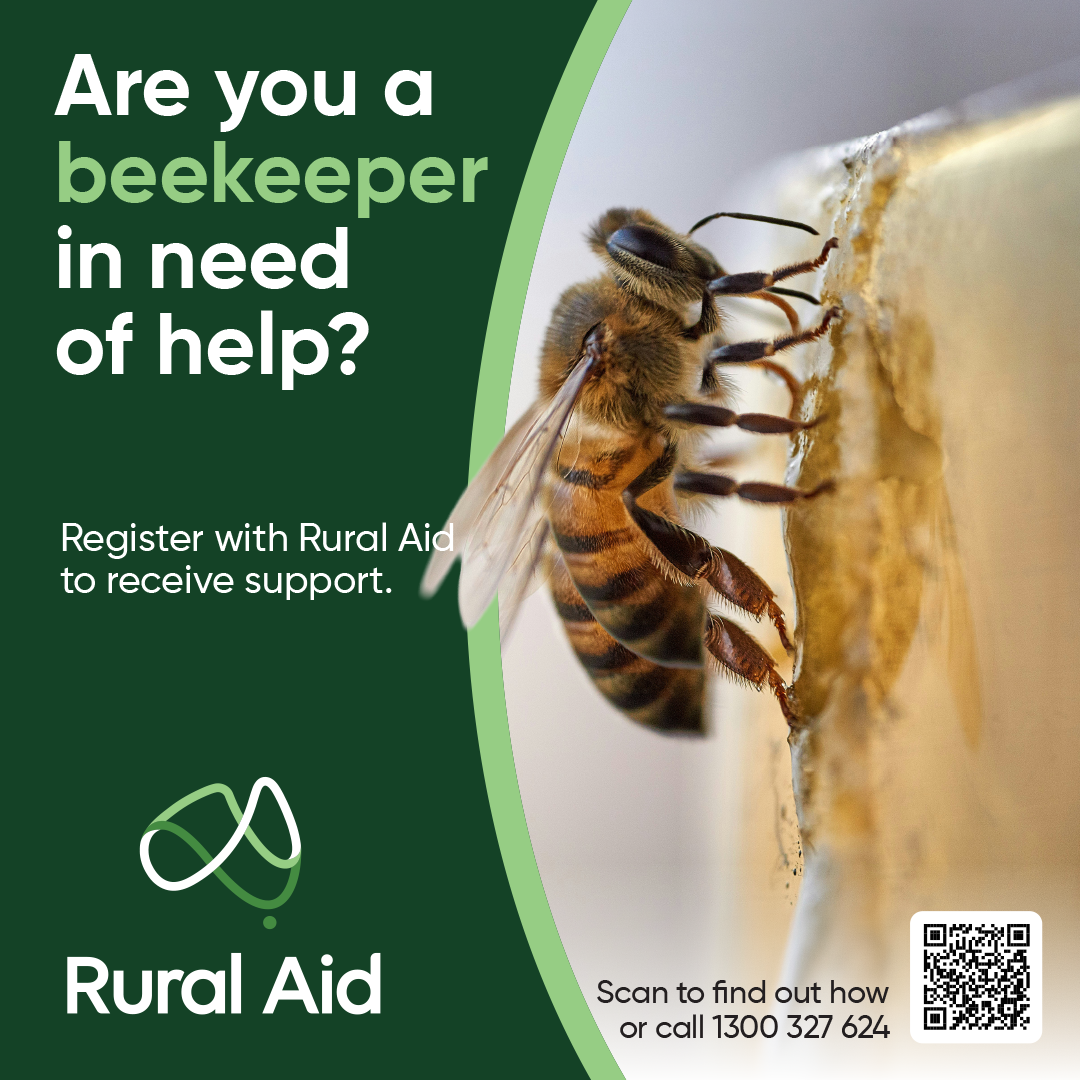
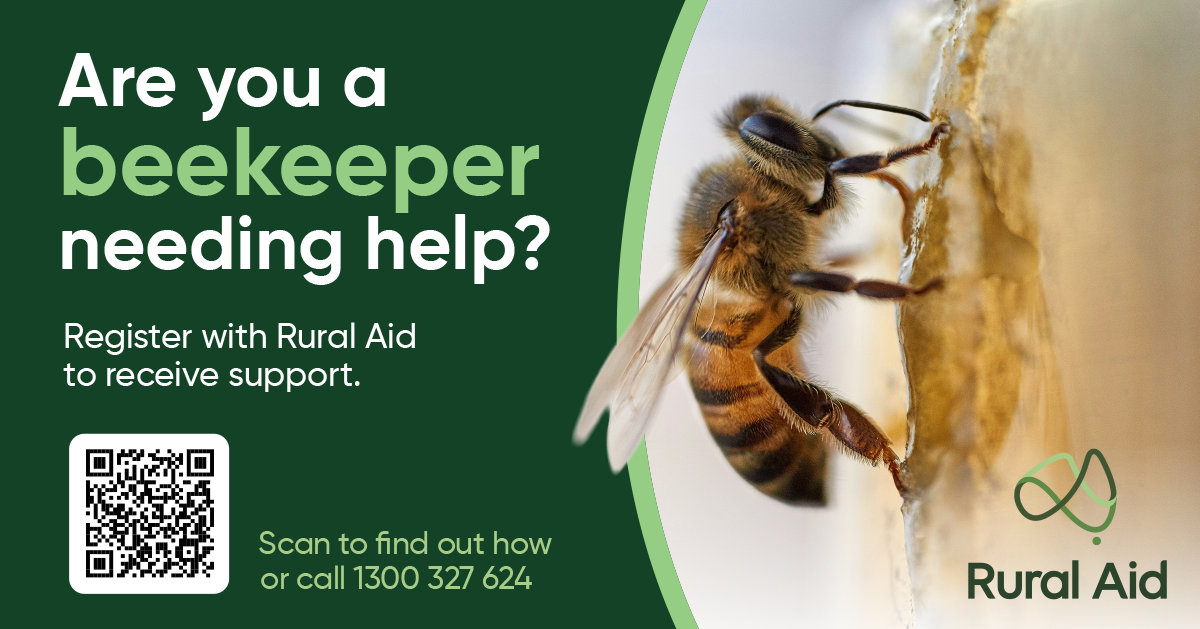
Australia’s beekeeping industry plays a vital role in agriculture, food production and regional communities. Many beekeepers are currently facing ongoing challenges, including the impact of varroa mite, rising operational costs, biosecurity concerns and seasonal pressures.
At Rural Aid, we understand that hardship can affect all primary producers, including apiarists.
Our financial assistance program is available to support eligible primary producers experiencing hardship due to drought, flood, fire, biosecurity events and other significant challenges. This assistance can help ease immediate pressures and provide some support as producers manage their operations and plan ahead.
In addition, Rural Aid offers wellbeing support services and works alongside rural communities through a range of programs designed to help people navigate difficult seasons.
If you are a beekeeper experiencing hardship, or know someone who may benefit from support, we encourage you to reach out.
Rural Aid is here to support farmers, families and rural communities through every season.
Learn more about available support: www.ruralaid.org.au
Need assistance? Contact our team:1300 327 624
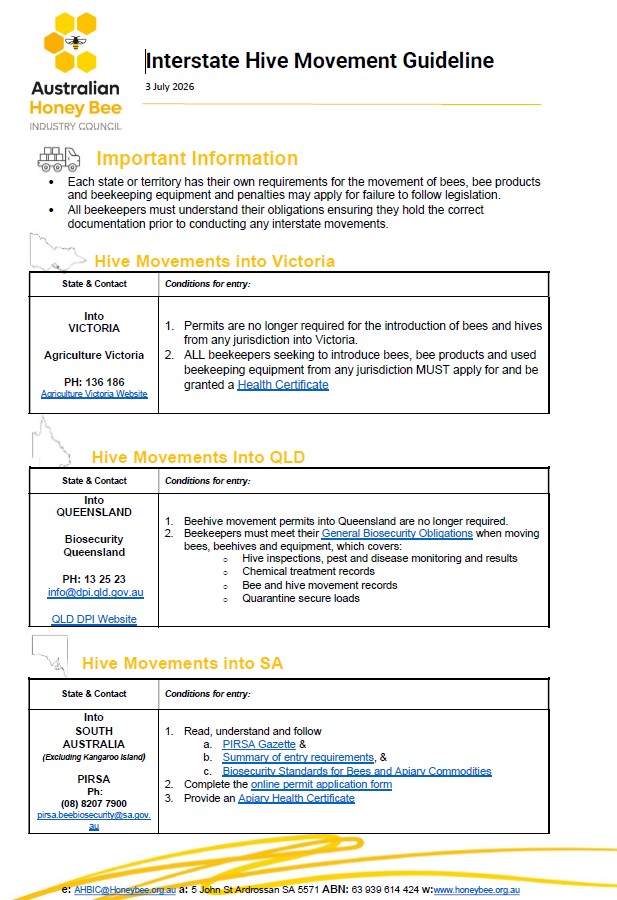
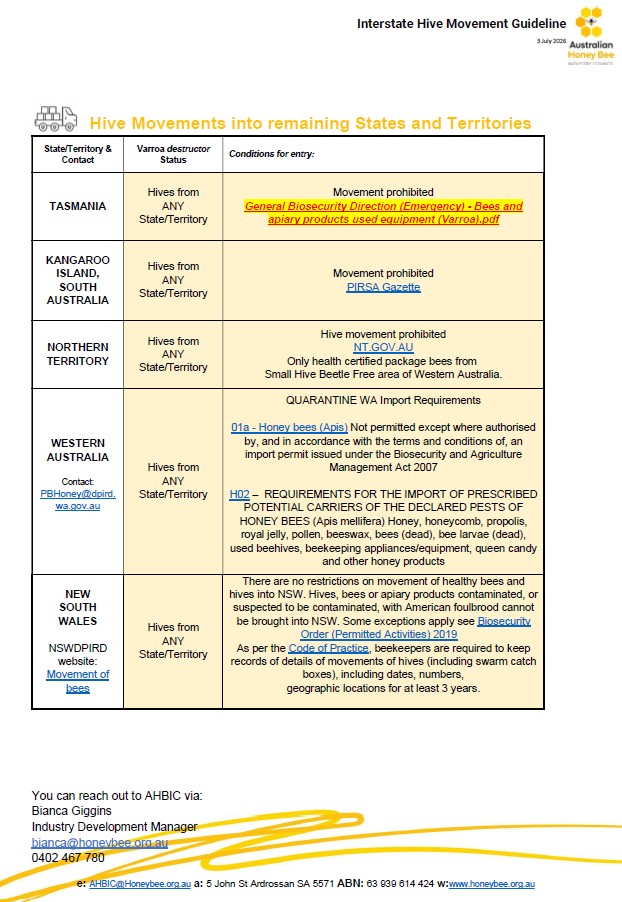
For access to links, click on document to open PDF View
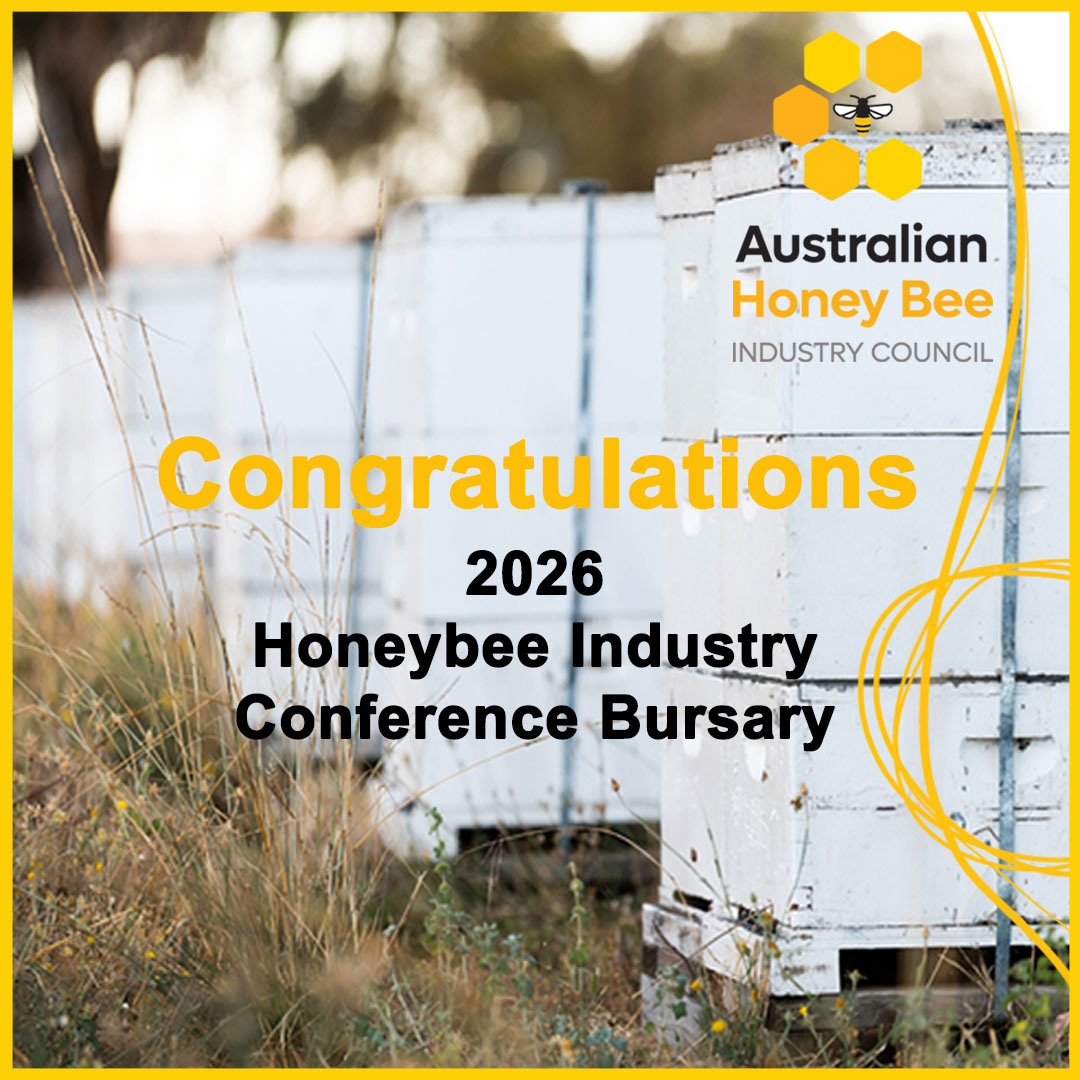
Building the next generation of industry leaders and researchers is critical to ensuring the resilience, productivity and sustainability of the Australian honey bee industry.
State apiculture conferences play a vital role in the industry ecosystem. They provide a unique opportunity for beekeepers, researchers, suppliers and industry organisations to come together to:
AHBIC was successful in receiving support from AgriFutures Australia’s “capacity building grants” earlier in May 2026.
There were 8 successful 2026 Honeybee Industry Conference Bursary Recipients, 4 researchers and 4 beekeepers who demonstrated they were early stage career, held practical European honeybee experience and a passion to progress a career in the honey bee industry into the future.
The bursary opened an opportunity for individuals to attend a state beekeeping conference and network throughout the events, establishing a solid foundation of future associates and colleagues across the honey bee industry.
This project contributed directly to strengthening the future workforce capacity of the Australian honey bee industry.
By supporting early-career beekeepers and researchers to attend industry conferences, it helped accelerate the professional development of emerging industry participants. It also strengthened connections between industry and research, while building confidence and leadership capability among the next generation of contributors. In addition, it increased awareness of key national priorities such as biosecurity, pollination services, and emerging research.
Importantly, the program helped establish a cohort of engaged early-career participants who are now more likely to remain active in the honey bee sector and contribute to its long-term sustainability.
For researchers, the opportunity to engage directly with commercial beekeepers ensured that future research was better grounded in real industry needs. For beekeepers, exposure to new research and technologies supported improved on-farm decision-making.
Overall, the initiative provided a practical and effective way to strengthen knowledge exchange, capability development, and collaboration across the honey bee industry workforce.
We are thrilled to share some reflections from the participants:
“The networking opportunities opened meaningful collaborative pathways. I made contact with beekeepers eager to trial my strategies, with some extending invitations for site visits to explore using their hives in future experiments. Connecting with fellow researchers also provided important scientific feedback and practical guidance on engaging with industry and communicating findings effectively.”
“The conference also allowed me to meet and speak with other beekeepers, including commercial operators and hobbyists, who are dealing with varroa, resistant mites, colony losses, and the emotional and financial pressure now facing the industry. Those conversations were extremely valuable because they helped me understand that the challenges I am seeing locally are part of a much larger industry-wide issue.”
“As an early-career researcher working on Varroa, feral honey bees and industry biosecurity, the opportunity to speak casually with beekeepers, researchers, industry representatives and policy-focused organisations gave me a clearer understanding of the practical challenges facing Australian beekeeping. These conversations helped me see where my research can be most useful and how it can better support industry needs. It also helped me build confidence introducing myself, explaining my project, and identifying future collaboration pathways.”
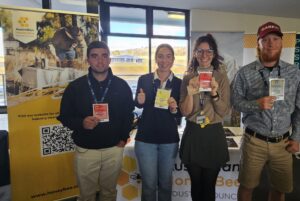
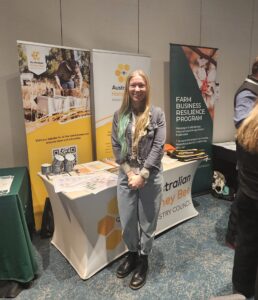
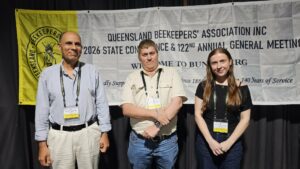
A big thank you to AgriFutures Australia for awarding the grant under the People and Capability Program. Without your support, AHBIC would not have been able to provide this valuable industry bursary, which has been a fabulous opportunity for the future workforce and innovative thinkers among industry.

The current threats to the Australian beekeeping industry mean that it has never been more important to protect and promote our industry to ensure our long-term economic viability. Back in 2022, AHBIC launched our “Honey Fighting Fund” to begin a multi-pronged approach which included gathering authenticity data in order to protect Australia’s beekeeping industry and using the de-identified info in building a solid, data driven de-identified platform to advocate on behalf of industry to our government for policy reform.
As a result of AHBIC’s pressure and relationship building with our federal counterparts we can now share work that has been undertaken. The Australian Federal Department of Agriculture, Fisheries and Forestry (DAFF) conducted a pilot survey to assess the authenticity of imported honey samples and compare the department’s current border tests with the performance of selected commercially available analytical tests.
The survey was undertaken with food regulatory agencies in New South Wales, Queensland, South Australia, Victoria and Western Australia, which assisted with sample collection activities. Sampling was conducted between October and November 2025, with samples collected from importers and retail sources representing 95% of the imported honey (excluding NZ).
Laboratory analysis was conducted by the National Measurement Institute.
Testing included both:
AHBIC advocated for additional test assays to be included but were unable to secure the support from DAFF, however additional samples were taken to allow for further analysis.
Australia’s current government importation testing protocols utilise the C4 carbon isotope honey test, which we have demonstrated through AHBIC’s Honey Fighting Fund initial testing, to be insufficient in detecting basic global fraudulent methods. The DAFF pilot survey was designed to help substantiate AHBIC claims through comparing the panel test results with the NMR profiling.
All samples passed the government mandated panel of tests. However, a number of samples were identified through NMR as suspected to have foreign sugars present. These results align with the previous AHBIC tests results and has highlighted the problem to government through this independent testing.
The DAFF survey has demonstrated the potential weakness of the existing testing assays. DAFF have committed to working with AHBIC to evaluate alternative or additional testing to strengthen our boarder protection.
Results have been shared with the participating state food regulators and coordinated engagement with participating businesses is underway to communicate results with importers.
DAFF is now considering how best to implement the findings of the survey. AHBIC will continue to put pressure on the department for change, but it is a slow process. DAFF will continue working collaboratively with industry, state and territory regulators, technical experts and international counterparts to further evaluate available analytical methods that may strengthen Australia’s approach to detecting imports of adulterated honey.

If you aren’t already a Friend of AHBIC, we welcome you to join our group of organisations and individuals who are supporting Australia’s national beekeeping industry that supports you.

B-QUAL is an Industry Owned Quality Assurance System for Australian beekeepers.
How does B-QUAL certification benefit my business?
B-QUAL Certification also enables an enterprise to market its product under the B-QUAL logo to show that it meets the B-QUAL Industry Standards.
Complete your training at home at your own pace.
For more information and to obtain a Certification Information Pack, contact the B-QUAL Certification team.
www.bqual.com.au
B-QUAL Pty Ltd
Phone 07 49949820
Email: admin@bqual.com.au
